Why CityAppTour?
Explore a city in 1 day
Stories from local guides
Pause whenever you want
Works offline
Hands-free navigation
English guide
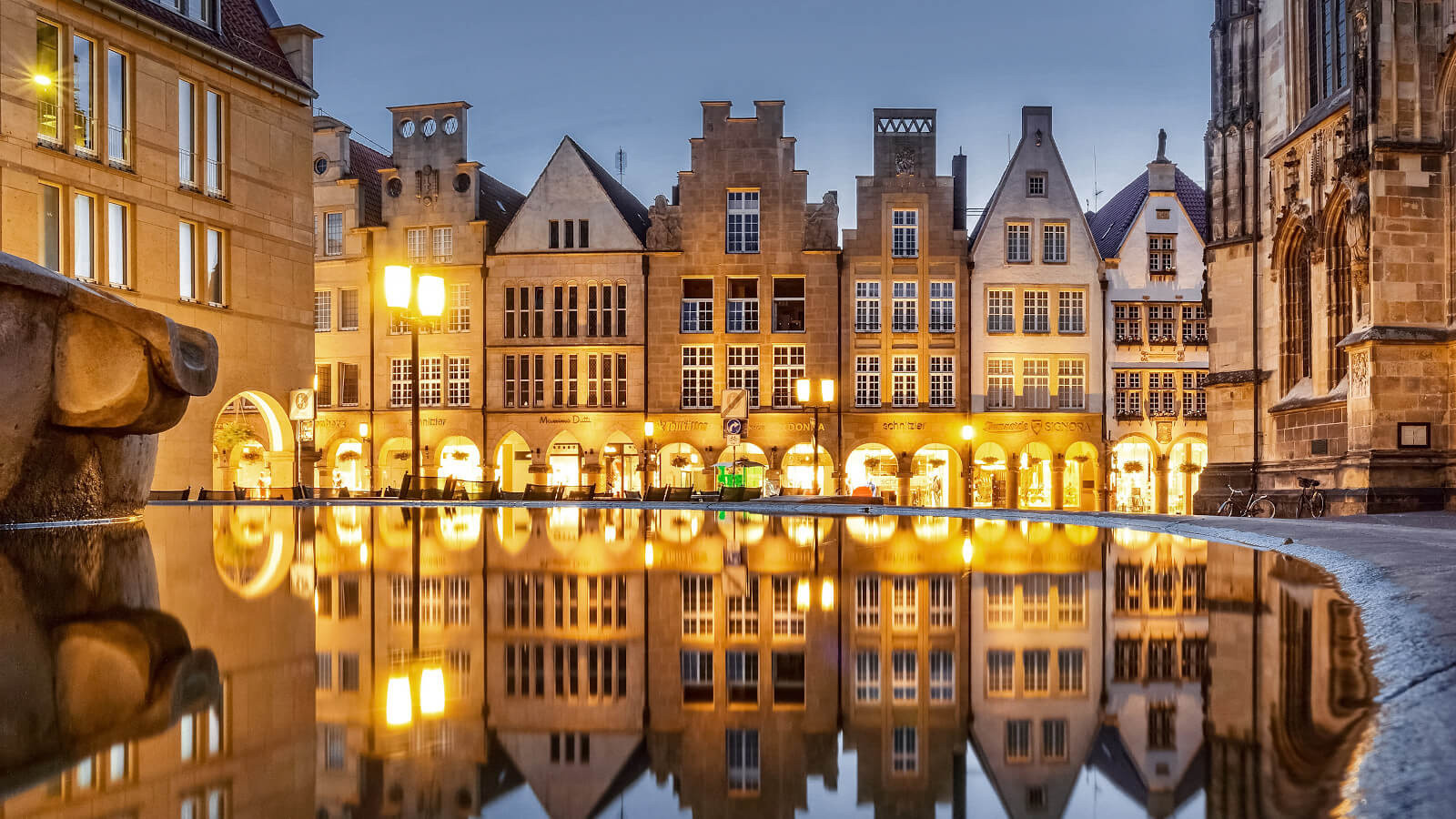
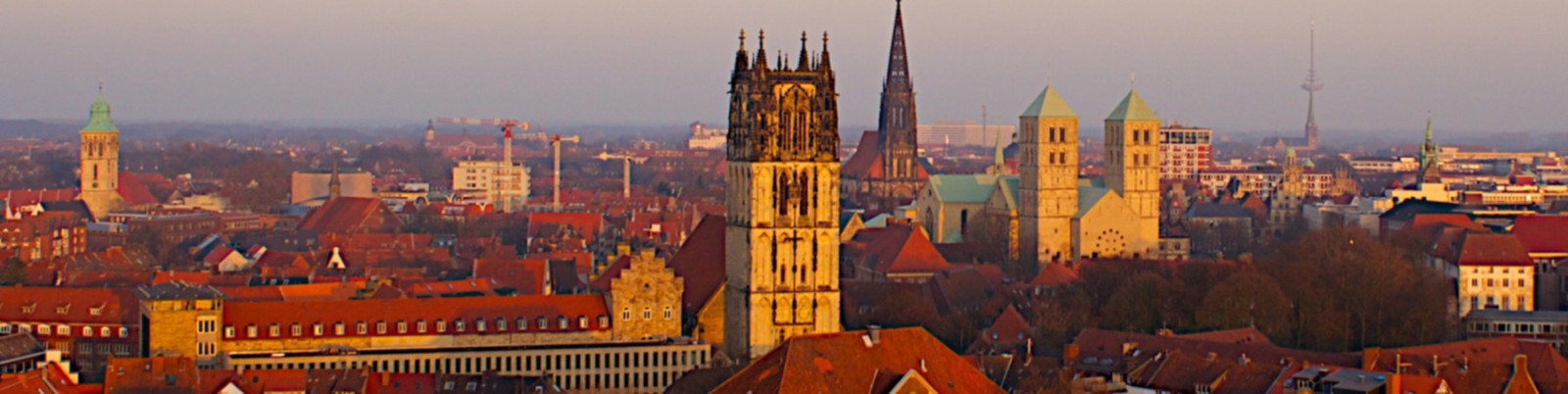
The medieval heart of Münster tells a fascinating tale of resilience. After WWII destruction, this university city meticulously reconstructed its historic center, creating a remarkable blend of restored Gothic architecture and modern urban planning. The Prinzipalmarkt's distinctive gabled houses and the towering St. Paul's Cathedral stand as testaments to this extraordinary rebirth.
These stories unfold through your headphones as you wander Münster's cobblestone streets at your own pace. With self-guided tours in Münster, you'll discover why locals call it the "bicycle capital of Germany" while navigating between peaceful Aasee Lake and the historic Peace Hall where the 1648 treaty ending the Thirty Years' War was signed.
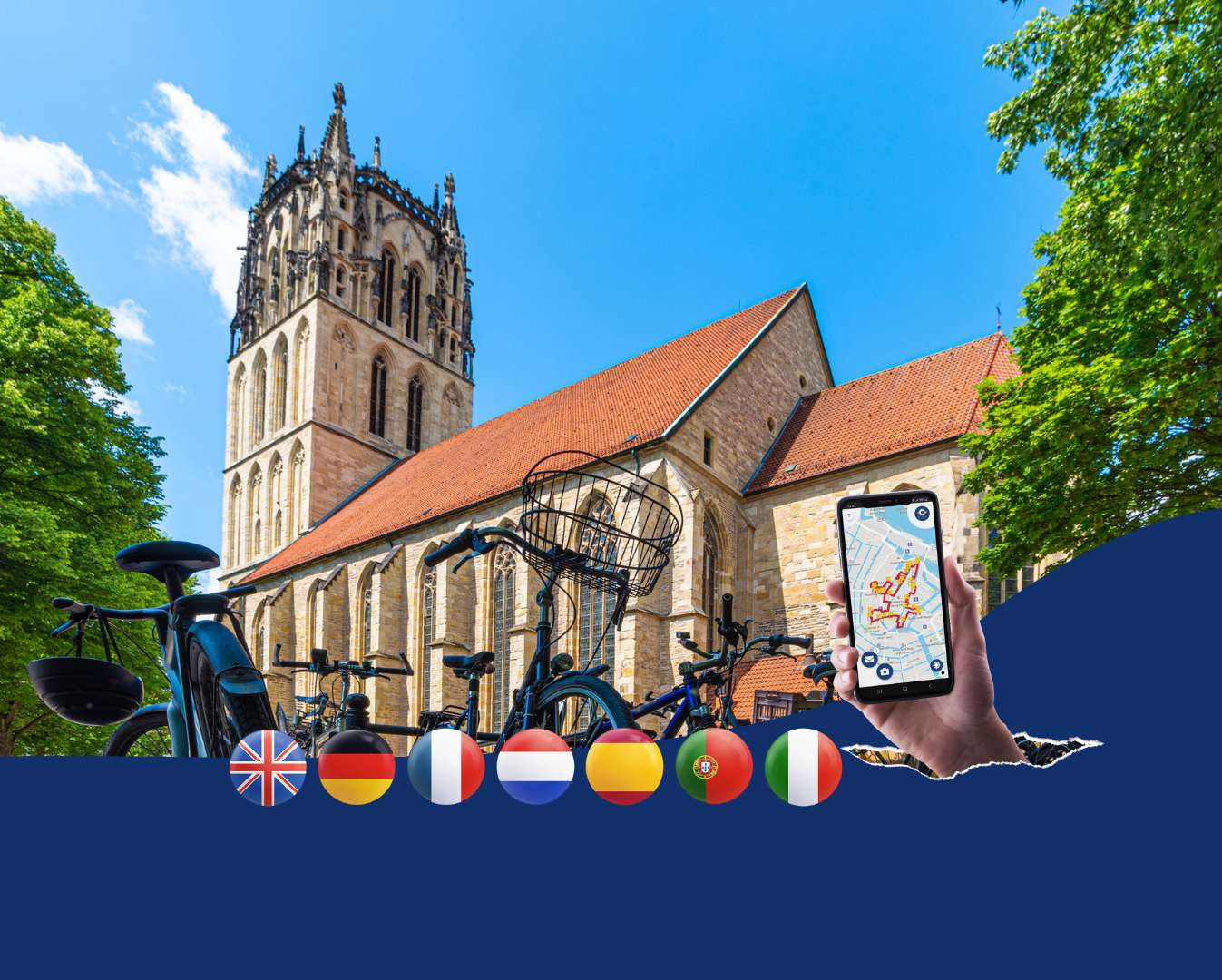
Explore this magnificent Gothic cathedral dating back to the 13th century. Its astronomical clock from 1540 is a masterpiece of Renaissance craftsmanship, with daily shows at noon attracting visitors from around the world.
Stroll along this picturesque shopping street lined with historic gabled houses and arcades. The reconstructed merchant houses create one of the most photogenic spots in the city.
Enjoy a peaceful walk or boat ride on this artificial lake in the heart of the city. The surrounding park offers perfect picnic spots and excellent views of Münster's skyline.
Housing one of Germany's most important art collections, this museum showcases everything from medieval sculptures to contemporary installations. The building itself is an architectural marvel.
Experience why Münster is known as Germany's bicycle capital by renting a bike and exploring the city's extensive cycling network. It's the most authentic way to see Münster without a guide.
Visit the historic chamber in the Town Hall where the Peace of Westphalia was signed in 1648, ending the Thirty Years' War. This pivotal moment in European history shaped modern international relations.
Discover over 8,000 plant species in this beautiful garden maintained by the university. It's a tranquil hidden gem in Münster, perfect for a relaxing afternoon.
Best Time to Visit
Münster shines from May through September when the weather is pleasant for walking and outdoor cafés come alive. Summer brings the Send Fair (three times yearly) and the Sculpture Projects exhibition (every 10 years, next in 2027). Winter visitors can enjoy charming Christmas markets and fewer tourists at major attractions.
Getting There
Münster is easily accessible by train, with direct connections from major German cities. The main station is just a 10-minute walk from the historic center. If driving, use one of the Park+Ride facilities on the outskirts, as the city center prioritizes pedestrians and cyclists. Within Münster, rent a bicycle (€10-15/day) to experience the city like a local—there are over 500,000 bikes for 300,000 residents!
Opening Hours and Holidays
Most shops in Münster open from 10:00 to 19:00 Monday through Saturday, with major stores staying open until 20:00 on Thursdays. Museums typically operate from 10:00 to 18:00 and are closed on Mondays. Restaurants serve lunch from 12:00 to 14:30 and dinner from 18:00 onwards. Note that many attractions have reduced hours on public holidays, which include German Unity Day (October 3) and regional North Rhine-Westphalia holidays.
Comfort on the Go
Wear comfortable shoes for Münster's cobblestone streets and pack a light raincoat—the weather can change quickly in this northwestern German city. Public drinking fountains are scarce, so bring a water bottle. The city offers excellent free WiFi hotspots in the center, but downloading our self-guided tours in Münster beforehand ensures uninterrupted exploration.
Local Customs and Etiquette
Münster residents are proud of their bicycle culture—respect bike lanes and never walk in them. When visiting churches or religious sites, dress modestly and maintain quiet. In restaurants, service is not included; a 10% tip is customary. Try the local specialty "Pfefferpotthast" (spiced beef stew) or stop at a traditional "Konditorei" for excellent cakes and coffee—an important afternoon ritual in Münster.
One full day is enough to see the main highlights: the Cathedral, the Prinzipalmarkt, the historic city hall (where the Peace of Westphalia was signed), the Überwasserkirche, a bike ride along the Promenade and an evening in the Kuhviertel. Two days allows a more relaxed pace with time for the LWL-Museum, the Botanical Garden and a longer Aasee circuit.
There is no established free walking tour in Münster of comparable quality or regularity. CityAppTour offers a fixed-price route you can start the moment you arrive, on any day and at any time.
Several of Münster's best experiences are free: cycling the Promenade — the 4.5-kilometre ring of linden trees that circles the old town —, walking the Prinzipalmarkt and admiring the Gothic arcade facades, visiting the exterior and interior of the Cathedral, the Überwasserkirche and the historic city hall facade, and the Aasee lake and its waterside park. The LWL-Museum für Kunst und Kultur has free admission on certain days.
Münster is famous for four things: being the bicycle capital of Germany (there are an estimated 500,000 bikes for 320,000 residents), the Peace of Westphalia signed here in 1648 that ended the Thirty Years' War — one of the most important treaties in European history — its Gothic Cathedral and the historic Prinzipalmarkt with its stepped gable buildings, and the Aasee lake with its circular promenade that locals circle by bike in all weathers.
Plan around 2 hours for the walking tour through Münster's historic centre. The route covers the Cathedral, the Prinzipalmarkt, the historic city hall, the Überwasserkirche, the Promenade and the key streets of the medieval core — all at your own pace.
Yes, the tour can be shared with the people you are travelling with. Check the app for the current sharing options and any available group discounts.
Yes — Münster is one of the most distinctive and liveable cities in Germany and well worth a visit. It is famous as the "city of bicycles" — with more bikes than people — a beautiful historic centre that was meticulously rebuilt after World War II, the Westphalian Peace Treaty signed here in 1648, and a huge student population that keeps the city lively year-round. It is compact enough to explore in a day or two and is an easy stop between Amsterdam, Cologne and Hamburg.
A CityAppTour audio tour lets you explore Münster entirely at your own pace. You can linger at the Cathedral, take time on the Prinzipalmarkt, follow the Promenade by foot or bike, or stop in the Kuhviertel for a coffee — without a group schedule. No booking required and the tour works offline from the moment you download it.
The tour is written for adults, with content on the Thirty Years' War, Gothic architecture and Westphalian history. Children aged around 12 and up generally follow along well. Younger children can enjoy the walk — the Cathedral and the Prinzipalmarkt tend to hold the attention of visitors of all ages, and the Promenade is an enjoyable walk in any season.
Yes, the tour works fully offline after downloading. Download it on Wi-Fi before you travel and you have access to all audio, maps and points of interest throughout the day without using any mobile data.
Münster is the only German city where the everyday transport mode is the bicycle — not a policy aspiration but an observable reality on every street at every hour. It is also the only city in the world where a peace treaty in 1648 ended one of the most destructive wars in European history, a fact that defines its identity to this day. And it is a rare combination of a well-preserved historic centre, a large student population and a genuinely functional everyday city that has not been turned into a museum piece.