Why CityAppTour?
Explore a city in 1 day
Stories from local guides
Pause whenever you want
Works offline
Hands-free navigation
English guide
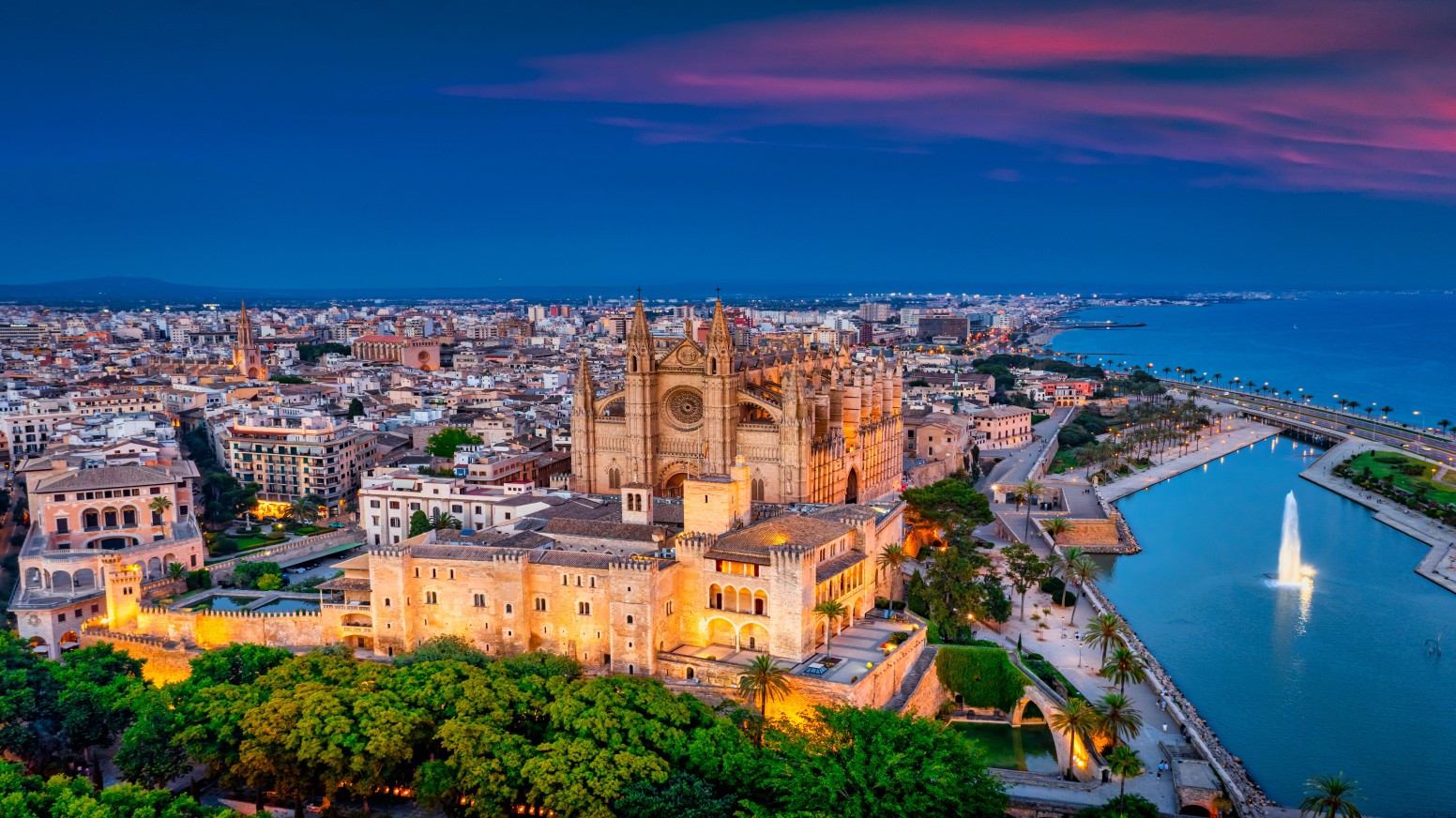
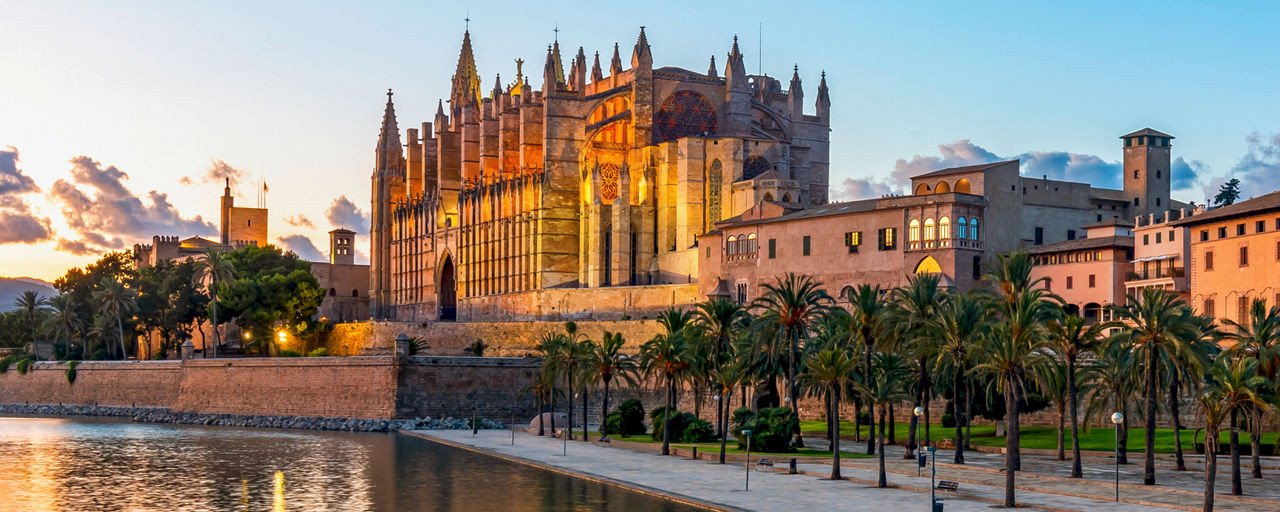
The golden-hued sandstone of Palma de Mallorca's historic center glows magnificently at sunset, casting warm light across the imposing Gothic cathedral and the labyrinth of narrow medieval streets. This Mediterranean jewel combines Moorish influences, Spanish traditions, and island culture into a captivating coastal capital where palm-lined promenades meet ancient city walls.
These stories unfold through your headphones as you wander at your leisure through Palma de Mallorca's most fascinating districts. An audio guide reveals the secrets behind the elaborate façades and tranquil courtyards while giving you the freedom to linger at a sunny plaza café or explore that intriguing boutique you spotted—something impossible with traditional guided tours.
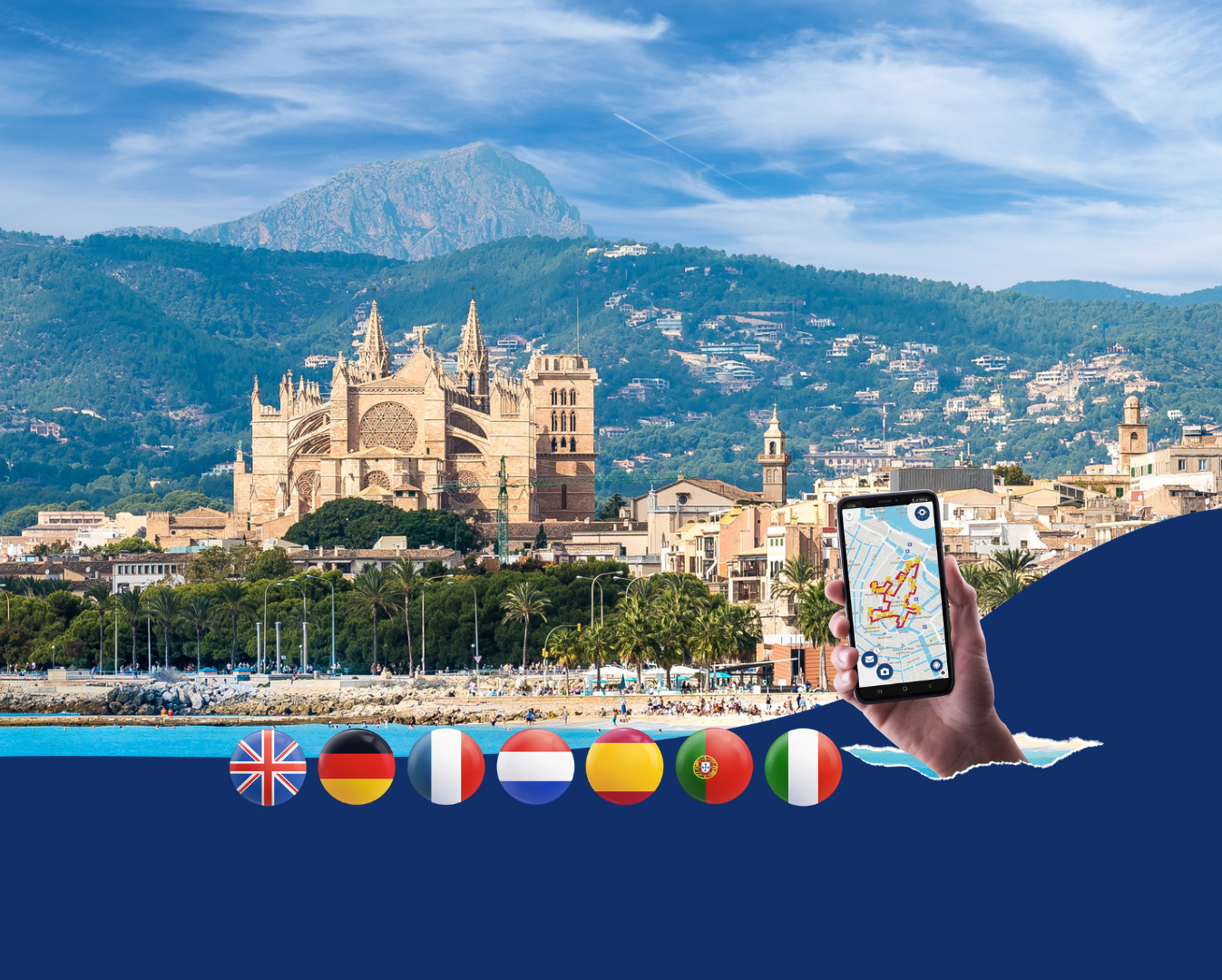
Besides our audio guides, there are many other ways to discover Palma de Mallorca. Here are some suggestions that can enrich your visit to this Mediterranean gem:
Best Time to Visit
Spring (April-June) and fall (September-October) offer ideal conditions for Palma de Mallorca sightseeing tours with pleasant temperatures and fewer crowds. Summer brings vibrant energy but also peak tourist numbers and heat, while winter remains mild (rarely below 10°C/50°F) with many attractions still open but shorter hours.
Getting There
Palma's airport is just 8km from the city center with frequent buses (Line A1, every 15 minutes) and reasonably priced taxis. Within the city, the EMT bus network is comprehensive, while the vintage wooden train to Sóller offers a scenic day trip. The compact old town is best explored on foot, with many must-see places in Palma de Mallorca within walking distance of each other.
Opening Hours and Holidays
Most shops open 10:00-20:00 Monday-Saturday, with many closing for siesta between 14:00-17:00. Museums typically close on Mondays, and the cathedral has limited visiting hours during religious services. Key local holidays include Sant Sebastià (January 20), Easter processions (dates vary), and Sant Joan (June 24) when many businesses close.
Comfort on the Go
Palma's Mediterranean climate means sun protection is essential year-round. Comfortable walking shoes are a must for navigating the old town's cobblestone streets. Carry a water bottle as public fountains are available throughout the city. The Palma de Mallorca attractions map in our app helps you navigate efficiently while conserving phone battery.
Local Customs and Etiquette
Mallorcans typically eat lunch later (14:00-16:00) and dinner very late (21:00 onwards). A small tip (5-10%) is appreciated but not mandatory in restaurants. When greeting locals, a kiss on each cheek is common among friends. Learning a few basic Catalan phrases (not just Spanish) will be warmly received by islanders.
The tour is written for adults, with content on Gothic architecture, Moorish history and Mallorcan culture. Children aged around 12 and up generally follow along well. Younger children can enjoy the walk — the Cathedral's scale and the Arab Baths tend to hold the attention of visitors of all ages.
Yes — Palma is one of the most impressive Mediterranean capital cities and well worth visiting in its own right, not just as a gateway to the island's beaches. The Gothic cathedral La Seu is one of the great church buildings of Europe, the old town is compact and packed with history, and the city has a genuine urban life with excellent restaurants, museums and a lively waterfront. Many visitors are surprised by how much depth the city has beyond the resort stereotype.
Palma is the only major city in Spain with a Gothic cathedral sitting directly on the waterfront, its reflection visible in the Parc de la Mar lake. It is also the only Spanish city where Moorish, Christian and Jewish heritage coexist within a few streets — the Arab Baths, the Gothic quarter and the former Jewish Call are all within easy walking distance. And it is a proper city of nearly half a million people rather than a resort, with a cultural life that functions year-round.
Free walking tours exist in Palma but rely on tips — typically €10–15 per person. CityAppTour offers a consistent, fully researched route at a fixed price that you can start the moment you arrive, on any day and at any time.
Yes, the tour works fully offline after downloading. Download it on Wi-Fi before you travel and you have access to all audio, maps and points of interest throughout the day without using any mobile data.
Absolutely. Palma's old town — the Casc Antic — is one of the finest historic city centres in the western Mediterranean. The narrow streets around the Cathedral, the Arab Baths, the Gothic mansions of the Barri Gòtic and the trendy Calatrava neighbourhood pack an enormous amount of history and atmosphere into a walkable area. The old town is also where the best independent restaurants, boutiques and bars are concentrated.
CityAppTour routes are built by content makers who have actually walked the city, researched local history and gathered input from people who know the place well. For Palma, that means telling the full story — the cathedral that took six centuries to build, the Moorish baths hidden in a courtyard, the Jewish quarter that vanished and the ensaimada that became an island symbol.
A CityAppTour audio tour lets you explore Palma entirely at your own pace. You can linger at the Cathedral's south portal, spend time in the Arab Baths, walk the old town lanes at your own rhythm or sit at a terrace with a coffee without a group schedule to keep. No booking required and the tour works offline from the moment you download it.
Palma and Mallorca have a strong culinary identity. The most emblematic product is the ensaimada — a spiral-shaped pastry made with lard, light and delicate, eaten plain or filled with cream, sobrassada or chocolate. Sobrassada itself — a soft, paprika-cured sausage spread — is uniquely Mallorcan. Pa amb oli (bread rubbed with tomato and drizzled with olive oil) is the local staple. Tumbet, a layered vegetable and potato bake, and fresh seafood from the Bay of Palma complete the picture.
Plan around 2 hours for the walking tour through Palma's historic centre. The route covers the Cathedral La Seu, the Parc de la Mar, the Barri Gòtic, the Arab Baths, the Plaça Major and the key streets of the old city — all at your own pace.
Yes, the tour can be shared with the people you are travelling with. Check the app for the current sharing options and any available group discounts.
Two to three days is enough to explore Palma's historic centre thoroughly. Day one: the Cathedral, the Royal Palace of La Almudaina, the old town and the Arab Baths. Day two: Bellver Castle, the Passeig del Born, the Es Baluard contemporary art museum and the waterfront. A third day allows a trip to the Serra de Tramuntana mountains or the villages of Valldemossa and Deià — 30 to 45 minutes away.