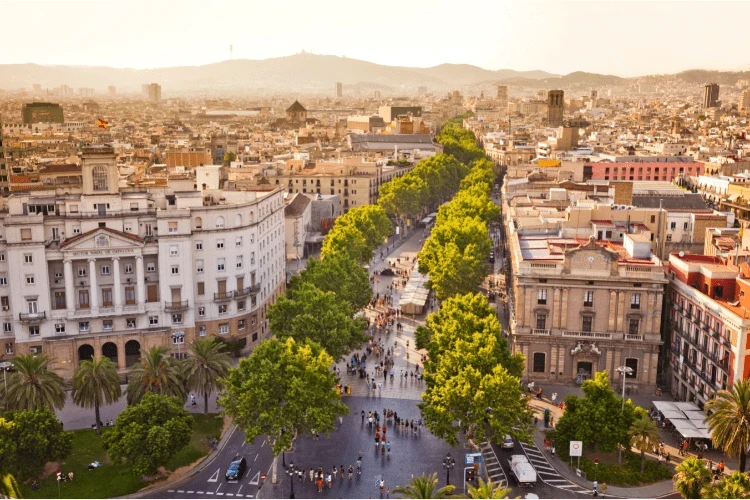
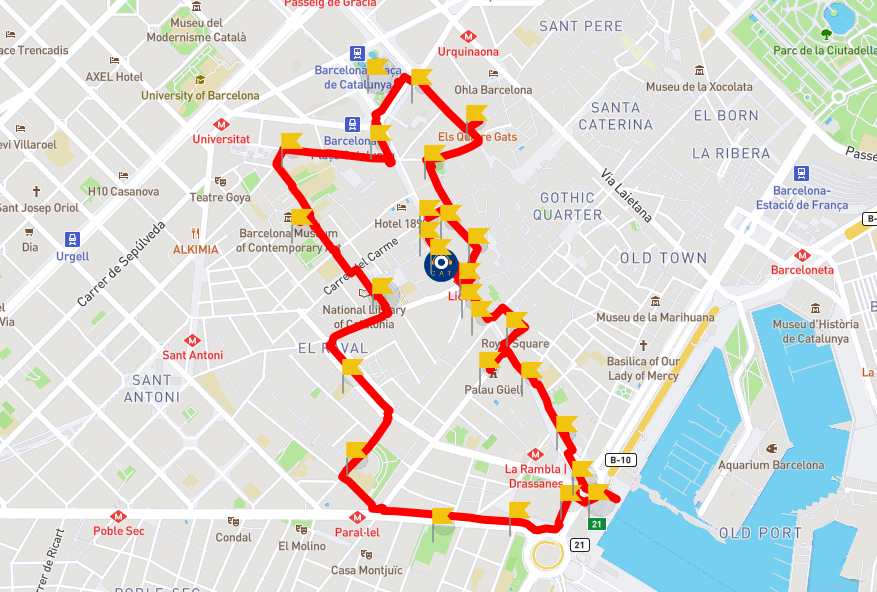
Rambla and El Raval, two fascinating neighborhoods in Barcelona, are the setting for a rich cultural discovery journey with the CityAppTour audio tour. This self-guided city walk with audio guide takes you past the Mercat de la Boqueria, enchanted with colorful stalls full of fresh produce and local delicacies, and past Font de Canaletes, where the legend begins that who drinks from this fountain water, returns to Barcelona. During this walking route, you will also explore the Maritime Museum and dive into the maritime history of the city. Wander through the bustling La Rambla, where street artists and stalls set the tone, and let yourself be immersed in the cultural heritage that Palau de la Virreina has to offer. Palau Güell, a masterpiece by Gaudí, takes you to the wonderful world of modernist architecture. Choose the CityAppTour audio tour and let yourself be guided by the stories and secrets of Rambla and El Raval, two neighborhoods that embody the soul of Barcelona.
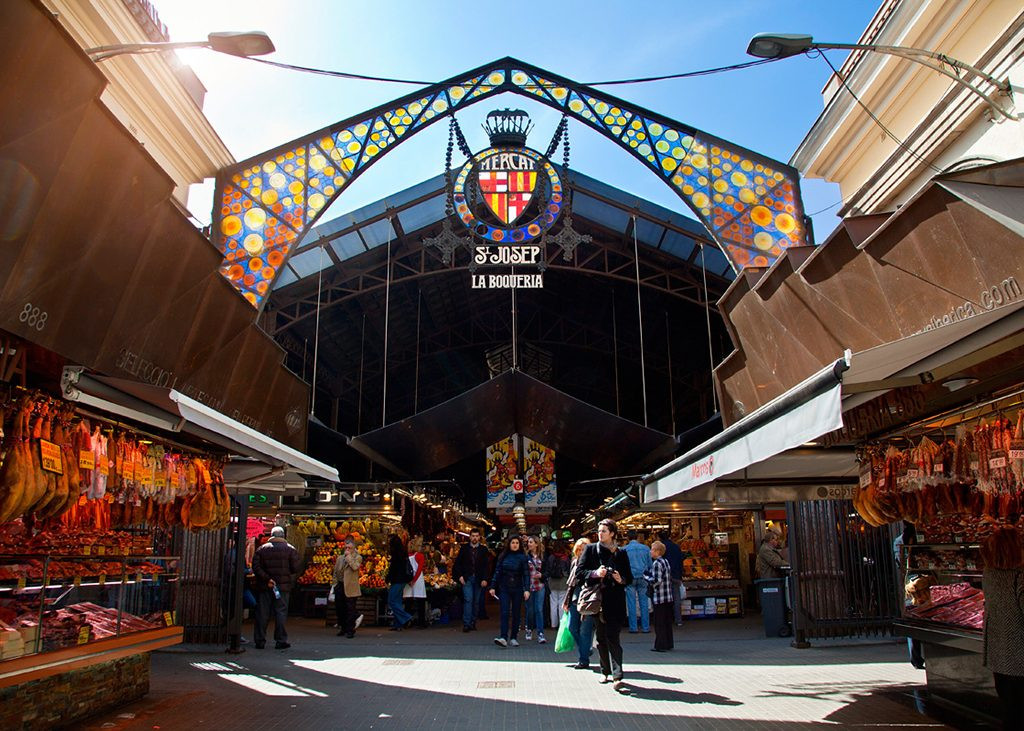
What Makes This Stop Special: Barcelona’s most famous food market has been feeding the city for over 800 years.
What began as a simple open-air meat market outside the medieval city walls grew into one of Europe’s most vibrant culinary hubs. Your audio guide Barcelona reveals how generations of locals, chefs, and traders turned La Boqueria into a symbol of Catalan food culture.
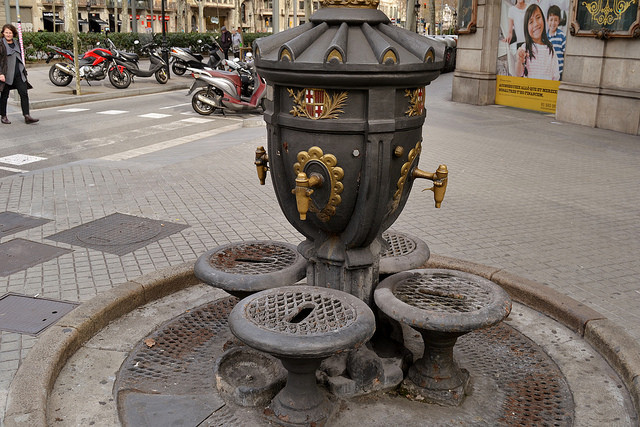
Local Tradition: Drink from this fountain and you’ll always return to Barcelona.
The Canaletes Fountain at the top of La Rambla is more than just a meeting point. For decades, FC Barcelona fans have gathered here to celebrate major victories. Your audio guide Barcelona explains how this simple drinking fountain became one of the city’s most beloved traditions.
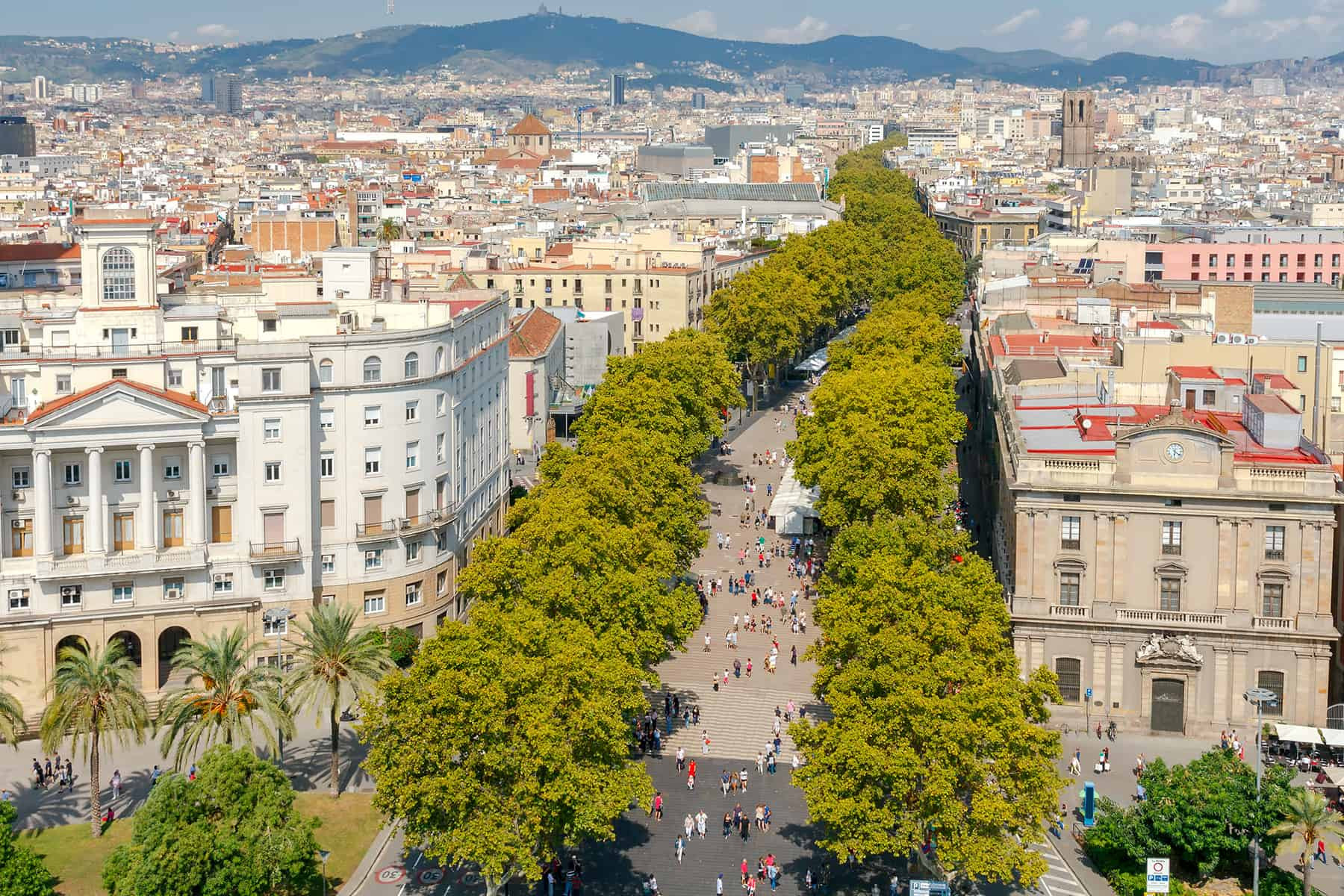
What Makes This Stop Special: Barcelona’s most famous street was once a river.
Before it became the city’s most lively boulevard, La Rambla followed the path of a seasonal stream outside the medieval walls. Your audio guide Barcelona uncovers how this former riverbed transformed into a vibrant promenade filled with performers, flower stalls, cafés, and centuries of urban life.
Ever Wondered: Why the street has five different sections with different names? Each tells part of the city’s story.
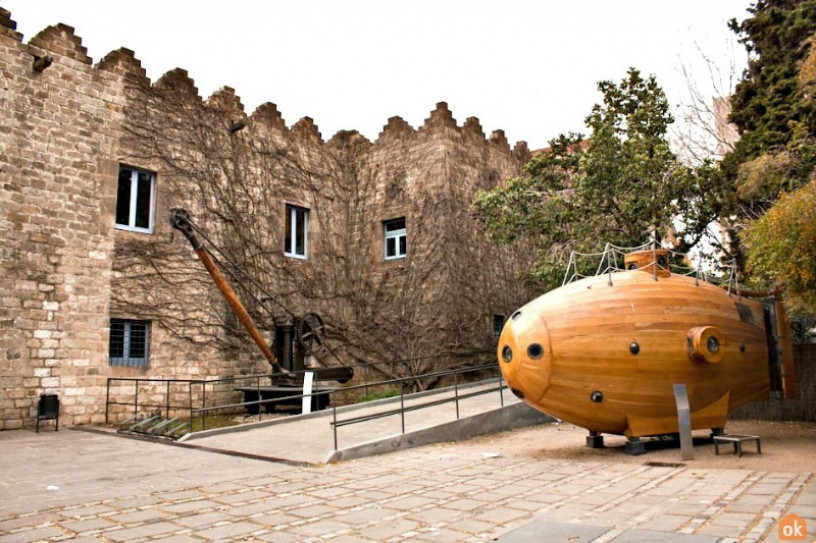
What Makes This Stop Special: One of the largest medieval shipyards in the world still stands here.
The massive stone halls of the former Royal Shipyards once built galleys for the powerful Crown of Aragon. Today they house the Maritime Museum, where centuries of Mediterranean naval history come alive. Your audio guide Barcelona reveals how Barcelona became one of the great maritime powers of medieval Europe.
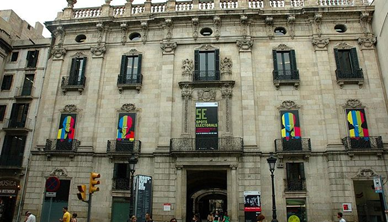
Hidden Gem: One of La Rambla’s most elegant buildings hides a dramatic past.
Built in the 18th century for the wealthy Peruvian viceroy Manuel Amat, this baroque palace reflected colonial wealth flowing into Spain. Your audio guide Barcelona explains why the viceroy died before ever living here — leaving the palace to his widow, the virreina who gave the building its name.
Today: The palace hosts contemporary art exhibitions inside its historic walls.
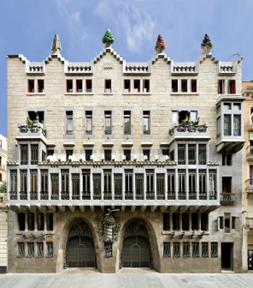
What Makes This Stop Special: One of Antoni Gaudí’s earliest masterpieces stands quietly off La Rambla.
Commissioned by the industrialist Eusebi Güell, this palace allowed Gaudí to experiment with bold ideas long before designing the Sagrada Família. Your audio guide Barcelona reveals how innovative ventilation, light wells, and the spectacular rooftop chimneys made this private residence revolutionary.