Why CityAppTour?
Explore a city in 1 day
Stories from local guides
Pause whenever you want
Works offline
Hands-free navigation
English guide
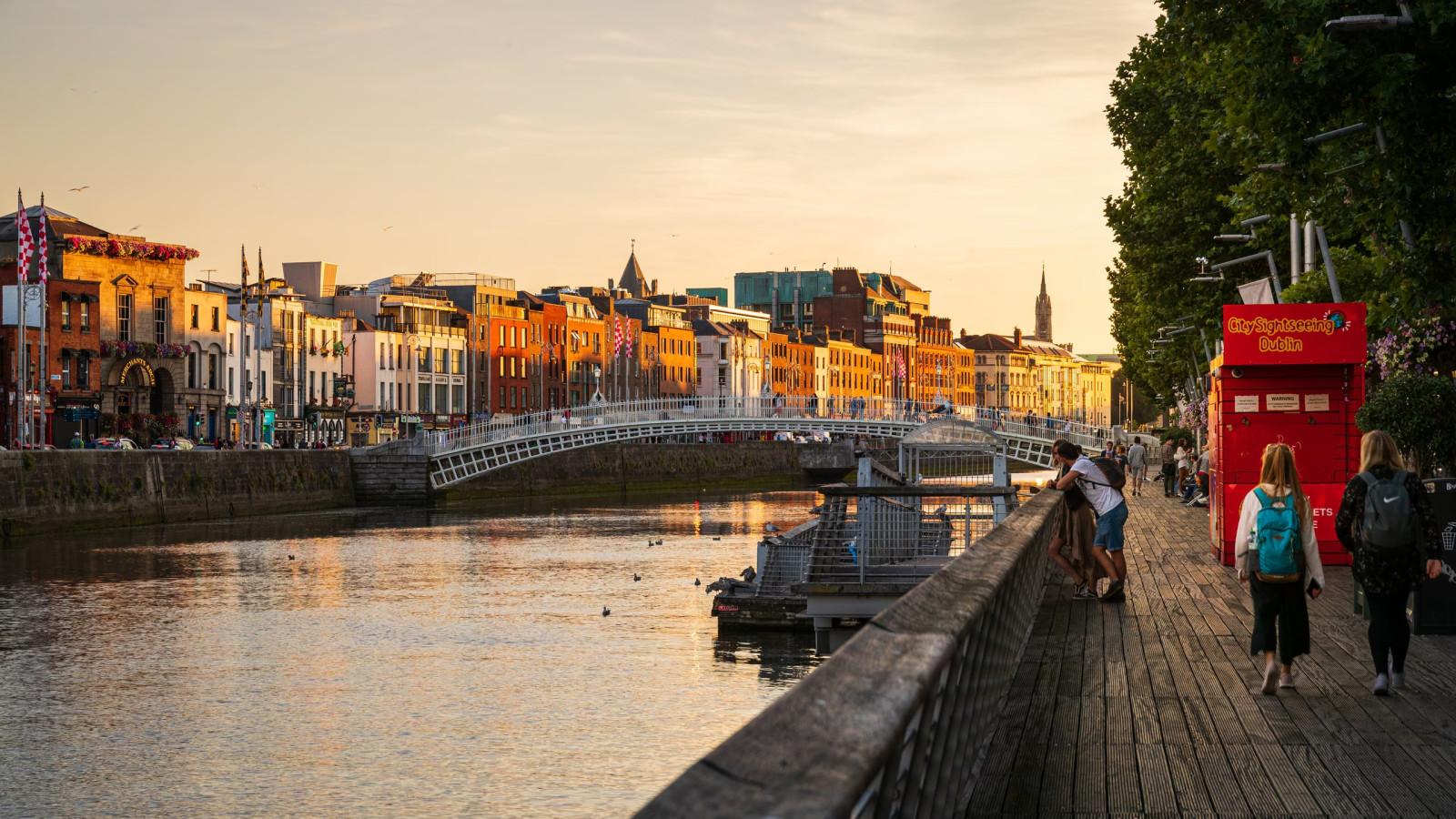
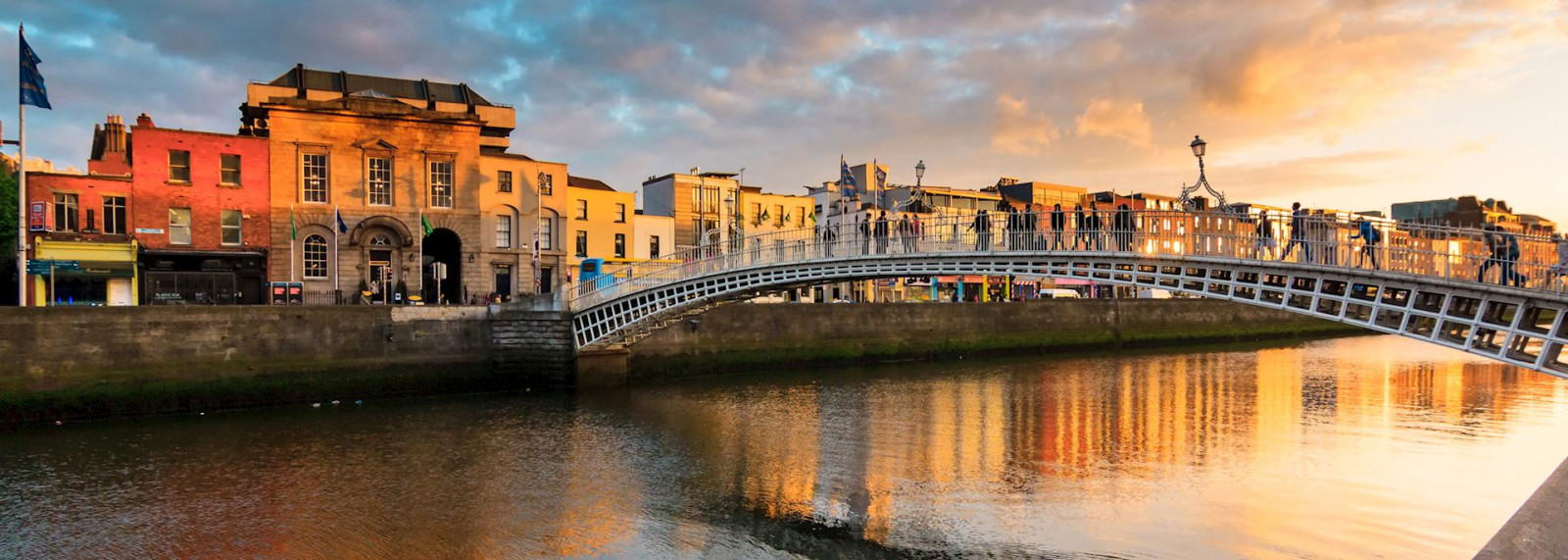
Dublin's literary legacy echoes through its Georgian squares and cobbled lanes, where writers like Joyce and Yeats once wandered. The city balances its Viking foundations and medieval treasures with a modern creative pulse, visible in the contrast between Trinity College's ancient library and the contemporary Docklands architecture.
These stories unfold through your headphones as you explore Dublin walking tours at your own rhythm. Local voices guide you past must-see places in Dublin while allowing you the freedom to linger at a traditional pub or duck into a gallery whenever inspiration strikes. The perfect companion for discovering Dublin without a guide.
Discover the story behind Ireland's iconic dark beer at this seven-floor interactive experience, culminating with a pint in the Gravity Bar with panoramic views of Dublin.
Learn about Irish whiskey production through an immersive 40-minute guided tour of this historic distillery, complete with a comparative whiskey tasting.
Explore one of Europe's largest unoccupied prisons and gain insights into Ireland's path to independence through the stories of its former political prisoners.
Escape the city for a day to witness Ireland's most spectacular natural wonder, with stops at charming villages and the lunar-like Burren landscape.
Marvel at this 9th-century illuminated manuscript, one of Ireland's greatest cultural treasures, housed in the magnificent Old Library.
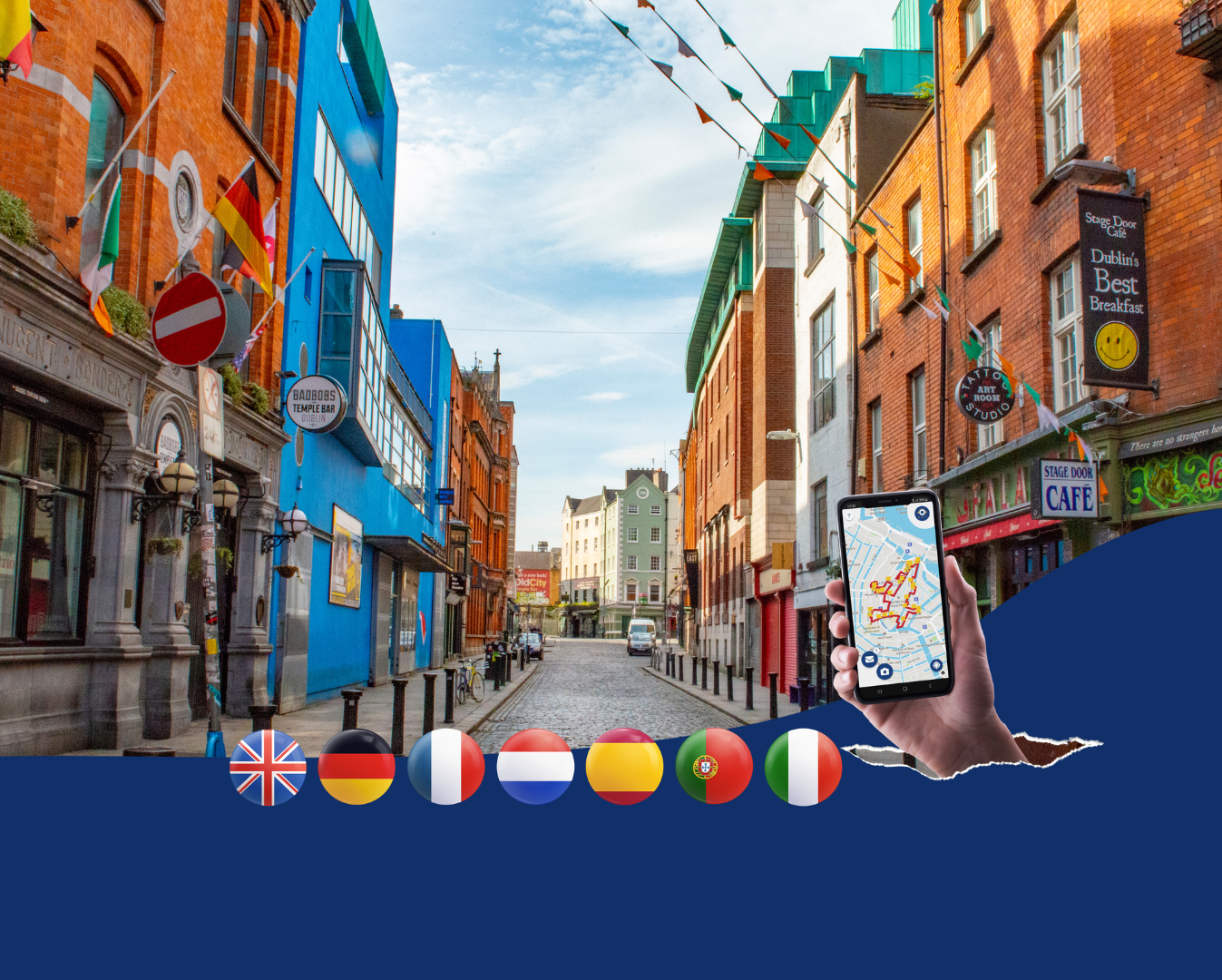
Wander through this cultural quarter with its cobbled streets, vibrant pubs, and weekend markets. Best experienced in early evening before the crowds arrive.
Explore over 800 years of Irish history at this former seat of British rule, now hosting presidential inaugurations and state functions.
Discover the far-reaching influence of Irish people around the world through this interactive digital museum in the Docklands.
Cycle or stroll through Europe's largest enclosed city park, home to Dublin Zoo, herds of wild deer, and the President's residence.
Best Time to Visit
Dublin shines from May to September when temperatures are mild and daylight extends into the evening, perfect for self-guided tours Dublin. St. Patrick's Festival in March offers a uniquely Irish experience, while December transforms the city with Christmas markets and festive lights. Autumn brings beautiful colors to the city's parks and fewer tourists to navigate around.
Getting There
Dublin Airport connects to over 190 destinations, with the Airlink Express bus or taxis providing easy access to the city center. Within Dublin, the LUAS tram system and Dublin Bus network cover most attractions, while the compact city center is perfect for walking tours. Consider the Leap Card for unlimited public transport, and remember that Dublin's bike-sharing scheme offers a pleasant way to explore the best areas in Dublin.
Opening Hours and Holidays
Most Dublin attractions open around 9:00-10:00 AM and close between 5:00-6:00 PM, with extended summer hours. Many museums offer free admission on the first Wednesday of each month. Shops typically open until 6:00 PM with late shopping on Thursdays, while pubs serve until 11:30 PM (later on weekends). Bank holidays (especially Easter and Christmas) affect opening times, so check ahead when planning Dublin sightseeing tours.
Comfort on the Go
Dublin's weather is famously changeable, so dress in layers and always carry a light raincoat regardless of the forecast. Comfortable walking shoes are essential for Dublin's cobbled streets and hills. Public water fountains are increasingly common, but carrying a reusable water bottle is recommended. Many cafés and pubs offer free WiFi and charging points if your phone needs a boost while navigating the Dublin attractions map.
Local Customs and Etiquette
Dubliners are known for their friendly banter, so don't be surprised by casual conversations with strangers. Tipping is customary (10-15%) in restaurants with table service but not required in pubs unless you're ordering food. When entering a pub, approach the bar to order rather than waiting for table service. If someone offers to buy you a drink, it's customary to reciprocate with a round later – this is called "getting your round in."
Dublin is famous for its literary heritage — the city has produced more Nobel Prize-winning writers per capita than almost anywhere: Oscar Wilde, George Bernard Shaw, William Butler Yeats and Samuel Beckett all have strong Dublin connections. It is famous for Guinness — the stout was first brewed here in 1759 at St James's Gate, still the site of the Guinness Storehouse. It is famous for its pub culture — Dublin has around 1,000 pubs, and a traditional session of live Irish music in a pub is one of the most distinctive experiences in Europe.
The tour is written for adults, with content on Irish history, the 1916 Rising and Dublin's literary connections. Children aged around 12 and up generally follow along well. Younger children can enjoy the walk — Trinity College and the Liffey quays tend to hold the attention of visitors of all ages.
Dublin's most iconic dish is the Irish breakfast (Full Irish) — bacon, sausages, black and white pudding, fried eggs, grilled tomatoes, mushrooms and soda bread, typically served with strong tea. Beyond breakfast: coddle (a slow-cooked Dublin stew of sausages, bacon and potatoes), fish and chips from a chipper, and soda bread with Irish butter. Dublin also has a strong contemporary food scene, particularly in the Liberties and along Exchequer Street, and some of the best seafood in Europe is a short train ride away on the coast at Howth.
Behind every tour is a small team of historians, local storytellers and content creators with a passion for culture and heritage. We don't make generic guides, but personal narratives based on local knowledge, first-hand experience and historical research. That way you can be sure you won't hear clichés, but the real story of Dublin with its Viking foundations, its rebel history and the literary tradition that turned this city into one of the most written-about places on earth.
Free walking tours exist in Dublin but operate on tips. CityAppTour offers a fixed-price route you can start the moment you arrive, on any day and at any time.
Plan around 2 hours for the walking tour through Dublin's historic centre. The route covers Trinity College, the Georgian squares, the Liffey quays, Temple Bar, Dublin Castle, Christ Church Cathedral and the key streets and squares of the city — all at your own pace.
Yes, the tour works fully offline after downloading. Download it on Wi-Fi before you travel and you have access to all audio, maps and points of interest throughout the day without using any mobile data. Download it on Wi-Fi before you travel and you have access to all audio, maps and points of interest throughout the day without using any mobile data.
Yes, the tour can be shared with the people you are travelling with. Check the app for the current sharing options and any available group discounts.
The eight unmissable experiences in Dublin are: Trinity College and the Book of Kells (a 9th-century illuminated manuscript and one of Ireland's greatest treasures), the Guinness Storehouse (the world's most visited brewery attraction, with a panoramic bar at the top), Temple Bar (the historic cobblestone quarter of pubs, live music and street life), St Patrick's Cathedral (the largest church in Ireland), the National Museum of Ireland (free entry, excellent Viking and Celtic collections), Kilmainham Gaol (where the leaders of the 1916 Easter Rising were executed — book in advance), Phoenix Park and a traditional Irish pub session.
Three days is comfortable for Dublin's main highlights. Day one: Trinity College and the Book of Kells, a walk along the Liffey, Temple Bar and the Georgian squares. Day two: the Guinness Storehouse, Kilmainham Gaol, Phoenix Park and the War Memorial Gardens. Day three: the National Museum of Ireland, St Patrick's Cathedral, a walk through the Liberties neighbourhood and an evening pub crawl along Grafton Street and beyond. Three days also allows a half-day trip to Howth or the Wicklow Mountains.
Dublin is the only European capital where a literary tradition is so embedded in the urban fabric that the city runs an annual Bloomsday festival (16 June) re-enacting James Joyce's Ulysses. It is a city where a 1916 rebellion is commemorated as the founding moment of a nation, where a Guinness brewery that has been operating since 1759 is the most visited attraction, and where the pub is not just a place to drink but the living room of the city — where politics, sport, music and conversation happen.