Why CityAppTour?
Explore a city in 1 day
Stories from local guides
Pause whenever you want
Affordable
Stress-free navigation with audio guidance
English guide
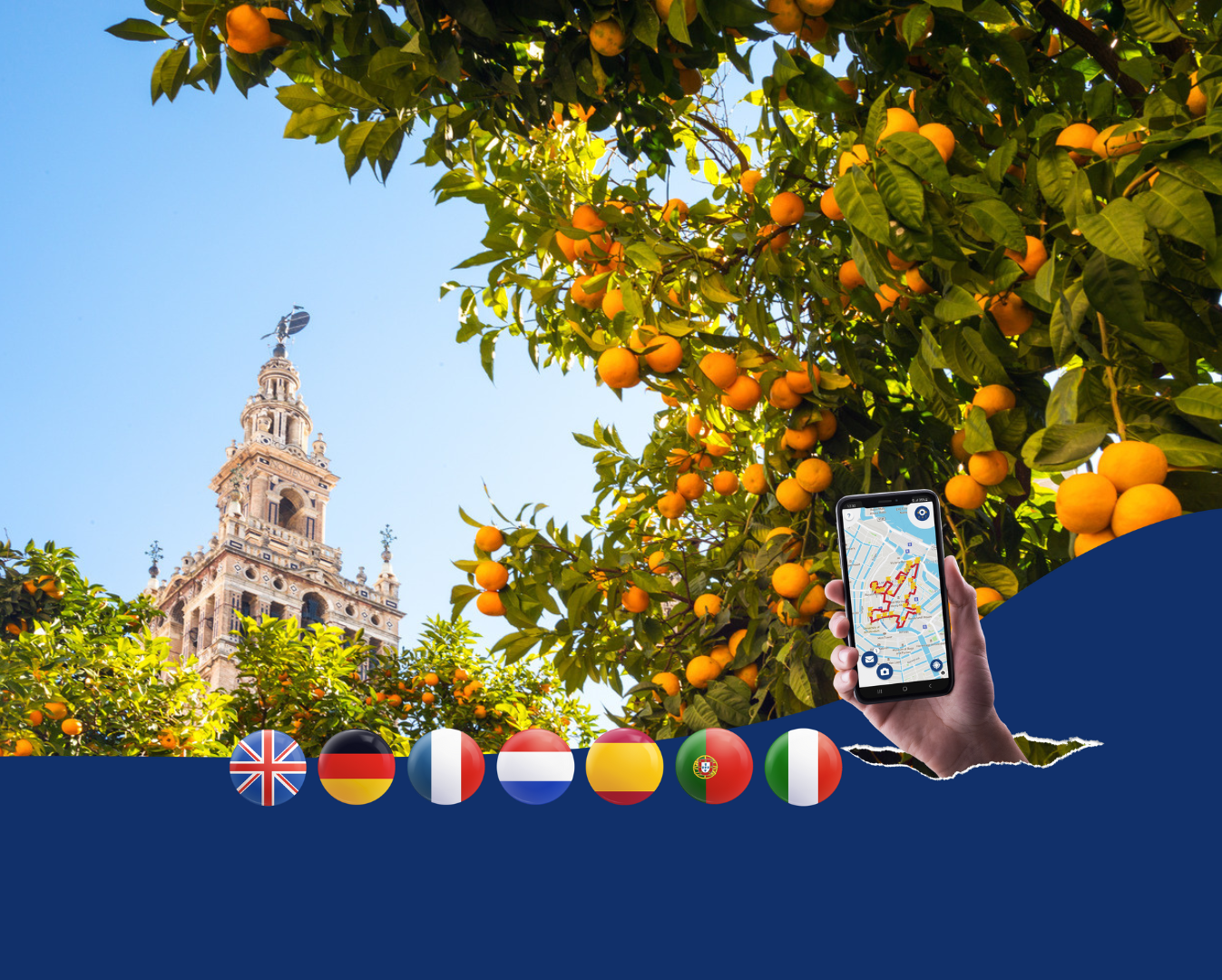
The orange-scented streets of Seville tell stories spanning over 2,000 years, from Roman settlements to Moorish palaces. As you wander between the towering Giralda and through the labyrinthine alleys of Santa Cruz, each corner reveals layers of Andalusian history that most visitors simply walk past.
With a self-guided tour Seville comes alive through your headphones as local voices explain why the Alcázar's architecture changed so dramatically over centuries, or how flamenco evolved in these very streets. You control the pace, pausing to savor tapas or explore a courtyard that catches your eye—freedom that traditional Seville sightseeing tours simply can't match.
Besides our audio guides, there are many other ways to discover Seville. Here are some suggestions that can enrich your visit:
Best Time to Visit
Spring (March-May) and fall (September-November) offer ideal temperatures for Seville walking tours, avoiding the scorching summer heat that regularly exceeds 40°C/104°F. April brings the famous Feria de Abril and spectacular orange blossoms, while October offers warm days with fewer crowds. Winter remains mild and provides a more authentic experience of the city without tourist crowds.
Getting There
Seville Airport connects to major European cities, with a convenient bus service to the city center (€4, 30 minutes). The Santa Justa train station offers high-speed connections from Madrid (2.5 hours) and Barcelona (5.5 hours). Within the city, the compact historic center makes self-guided tours Seville's best exploration method, though the efficient tram, metro, and bus network (€1.40 per journey) helps cover longer distances.
Opening Hours and Holidays
Most Seville attractions open around 10:00 AM and close between 18:00-20:00, with many observing the traditional siesta from 14:00-17:00. Museums typically close on Mondays. Shops follow similar patterns, though El Corte Inglés and shopping centers remain open throughout the day. During Semana Santa (Holy Week) and Feria de Abril, expect altered schedules and advance booking requirements for must-see places in Seville.
Comfort on the Go
Comfortable walking shoes are essential for navigating Seville's cobblestone streets. Carry a water bottle, especially between May and September, and consider a hat and sunscreen as shade can be limited in plazas. Many historic buildings lack air conditioning, so a handheld fan (a local souvenir) proves useful. The city offers numerous public drinking fountains with safe, refreshing water.
Local Customs and Etiquette
Sevillanos typically eat lunch around 14:00 and dinner after 21:00—arriving earlier marks you as a tourist and may mean limited menu options. When ordering tapas, start with 2-3 plates per person and add more as needed. Tipping isn't obligatory but rounding up or leaving 5-10% for good service is appreciated. When visiting churches or religious sites, modest dress covering shoulders and knees is expected.
Seville is one of Spain's great tapas cities. The local specialities are salmorejo — a thick, cold tomato cream served with hard-boiled egg and jamón —, espinacas con garbanzos (spinach with chickpeas, a classic Moorish-influenced dish) and montaditos (small open sandwiches). Gazpacho, the cold tomato soup, originates from Andalusia. The local drink is rebujito — dry sherry mixed with lemon soda — consumed in vast quantities during the April Fair.
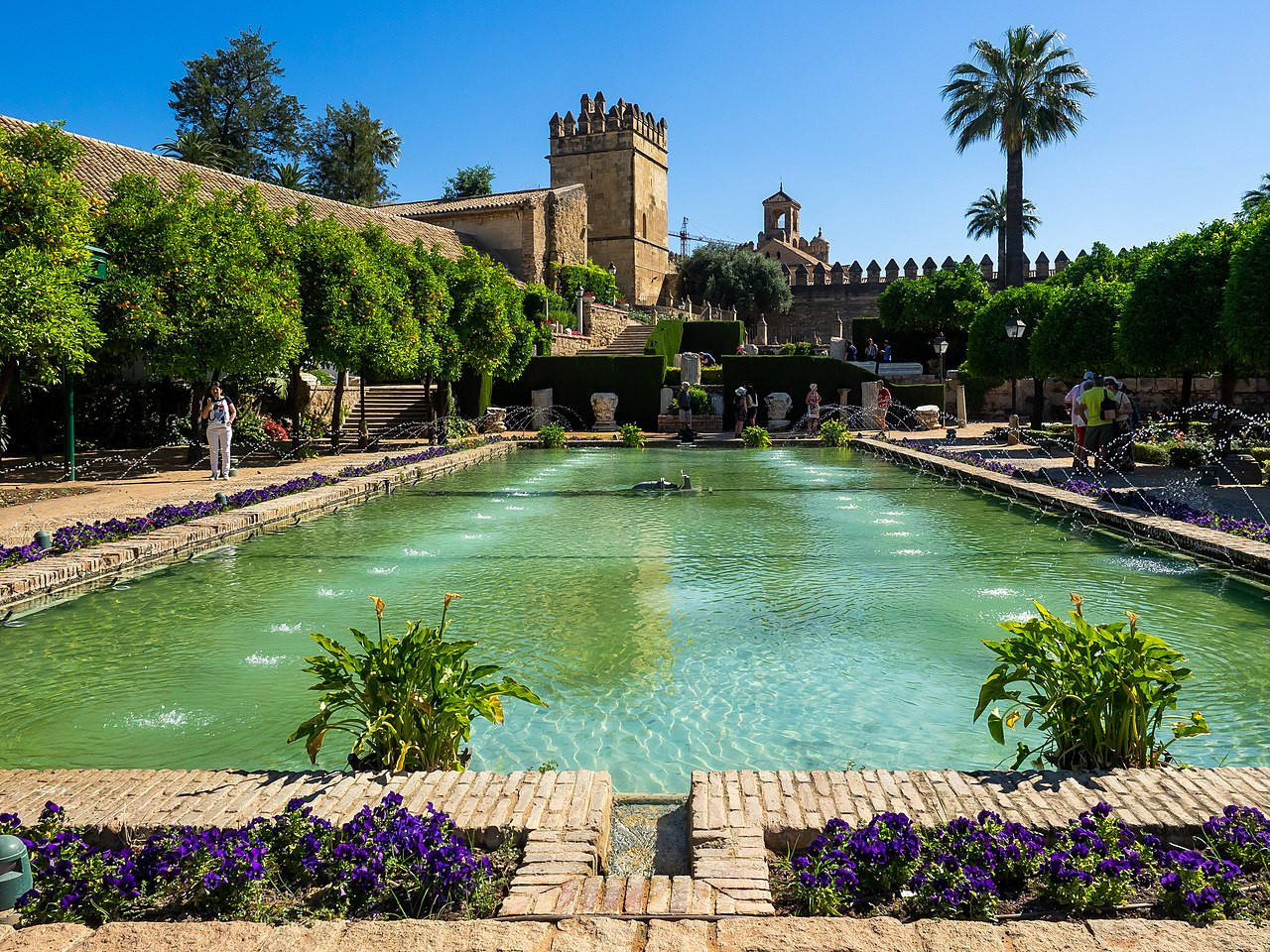
CityAppTour routes are built by content makers who have actually walked the city, researched local history and gathered input from people who know the place well. For Seville, that means telling the full story — the caliphs who built the Alcázar, the cathedral that swallowed a mosque, Columbus's final resting place and the Triana neighbourhood where flamenco was born.
Plan around 2 to 2.5 hours for the walking tour through Seville's historic centre. The route covers the Cathedral and La Giralda, the Alcázar quarter, the Barrio de Santa Cruz, the Plaza del Triunfo and the key streets and squares of the old city — all at your own pace.
Three days is the ideal amount of time in Seville. Day one covers the Cathedral, La Giralda and the Alcázar. Day two explores the Barrio de Santa Cruz, the Museo de Bellas Artes and the Triana neighbourhood across the Guadalquivir. Day three leaves time for the Plaza de España, the Metropol Parasol and any remaining museums or tapas bars. A fourth day allows a day trip to Córdoba or the white villages of Andalusia.
Yes — Seville is one of the most spectacular cities in Spain and absolutely worth visiting. It has three UNESCO World Heritage Sites in a single historic centre: the largest Gothic cathedral in the world, the Royal Alcázar palace (still used by the Spanish royal family) and the Archive of the Indies. Add flamenco, tapas culture, the Barrio de Santa Cruz and one of the most impressive city squares in Europe, and Seville delivers more per day than almost any other Andalusian city.
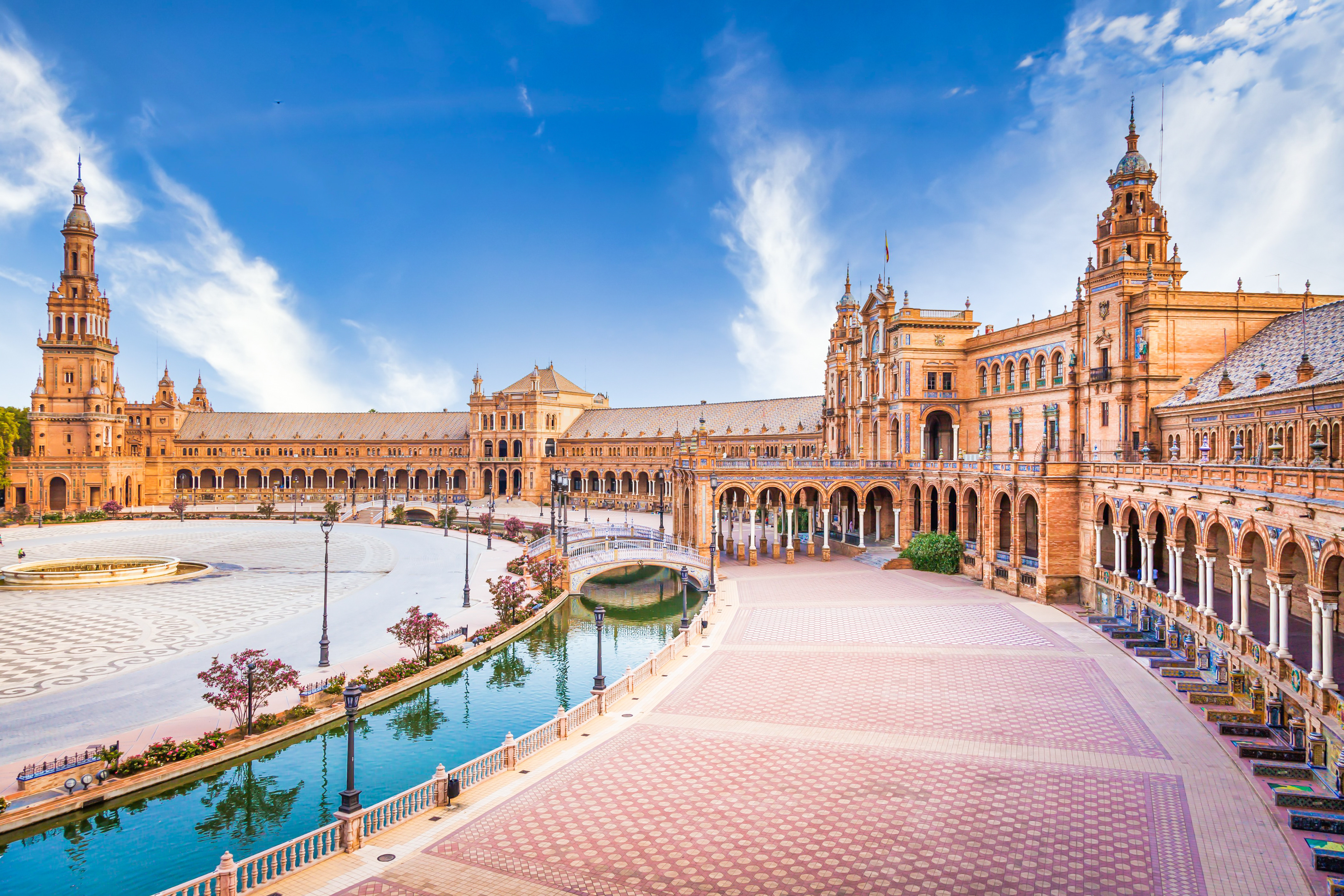
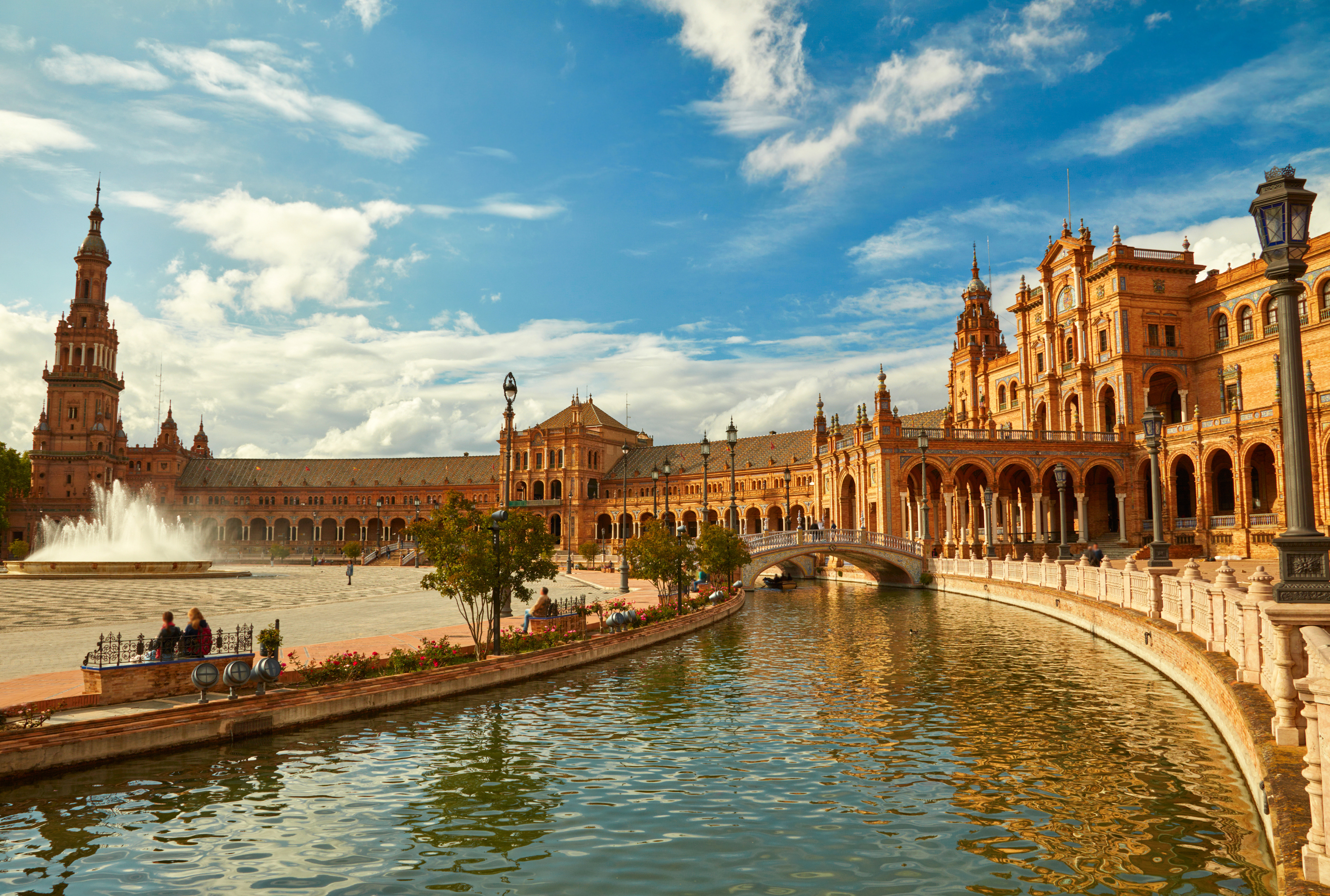
The five unmissable experiences in Seville are: the Cathedral and La Giralda tower — Columbus is buried inside —, the Real Alcázar with its extraordinary Mudéjar architecture and gardens, the Barrio de Santa Cruz (the former Jewish quarter), the Plaza de España and a night out in the Triana neighbourhood with flamenco and tapas. Arriving in spring, the orange blossom scent that fills the city streets is an experience in itself.
A CityAppTour audio tour lets you explore Seville entirely at your own pace. You can linger outside the Cathedral at golden hour, wander the Barrio de Santa Cruz without a schedule, or take a detour across the river to Triana — all without a group to keep up with. No booking required and the tour works offline from the moment you download it.
Yes, the tour can be shared with the people you are travelling with. Check the app for the current sharing options and any available group discounts.
Yes, the tour works fully offline after downloading. Download it on Wi-Fi before you travel and you have access to all audio, maps and points of interest throughout the day without using any mobile data.
Seville is the only city in Spain with three UNESCO World Heritage Sites in one historic centre, the only Spanish city where flamenco has its deepest roots and largest live scene, and the city where Christopher Columbus is buried. The Alcázar is the oldest still-inhabited royal palace in Europe, used by the Spanish royal family to this day. The combination of Moorish, Christian and Jewish history layered in a single square kilometre is unmatched anywhere in the country.
Free walking tours exist in Seville but rely on tips — typically €10–15 per person. CityAppTour offers a consistent, fully researched route at a fixed price that you can start the moment you arrive, on any day and at any time.
The tour is written for adults, with content on Moorish history, Gothic architecture and Andalusian culture. Children aged around 12 and up generally follow along well. Younger children can enjoy the walk — the Cathedral's scale, the Alcázar gardens and the narrow streets of the Barrio de Santa Cruz tend to hold the attention of visitors of all ages.