Why CityAppTour?
Explore a city in 1 day
Stories from local guides
Pause whenever you want
Affordable
Stress-free navigation with audio guidance
English guide
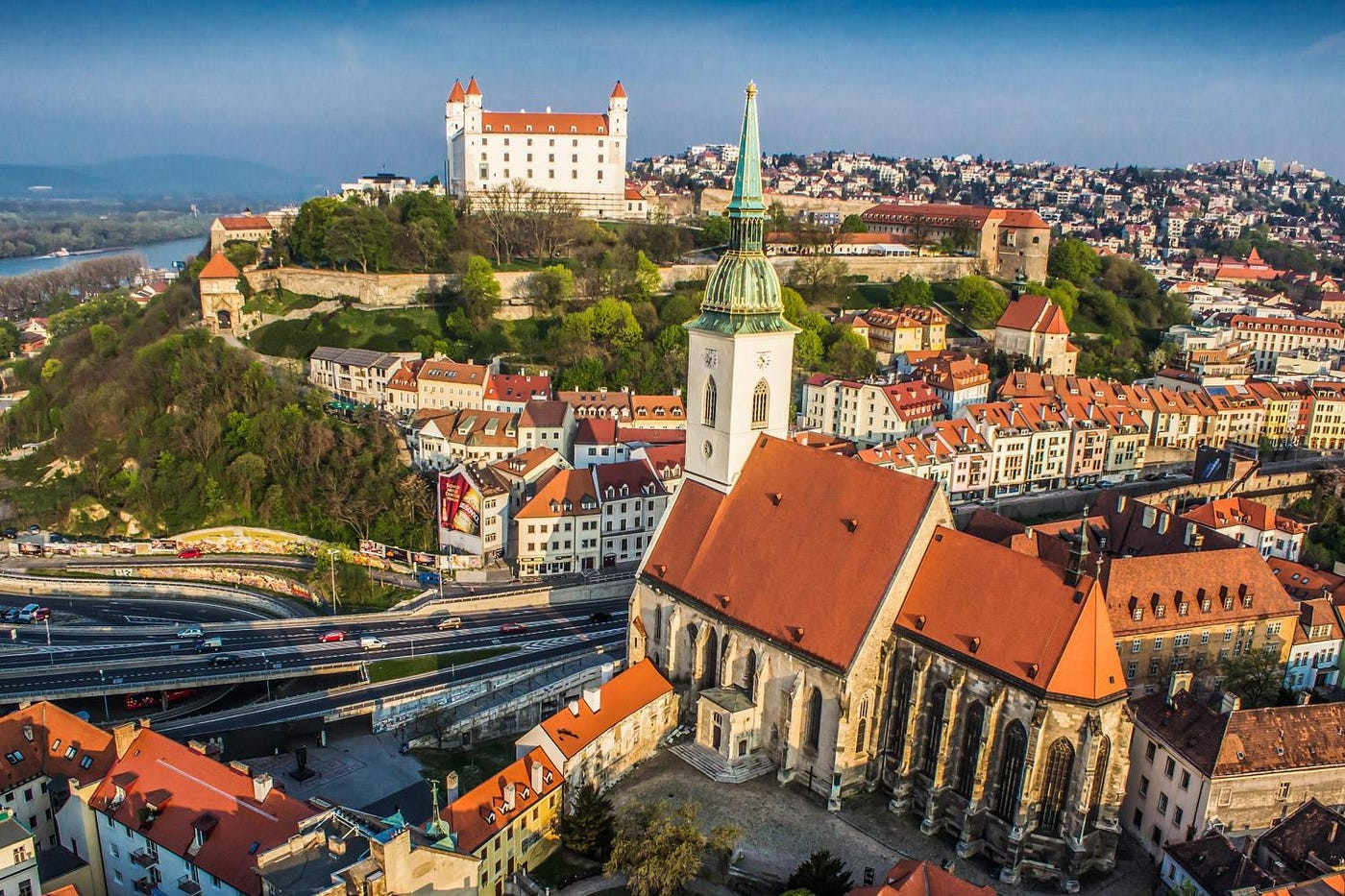
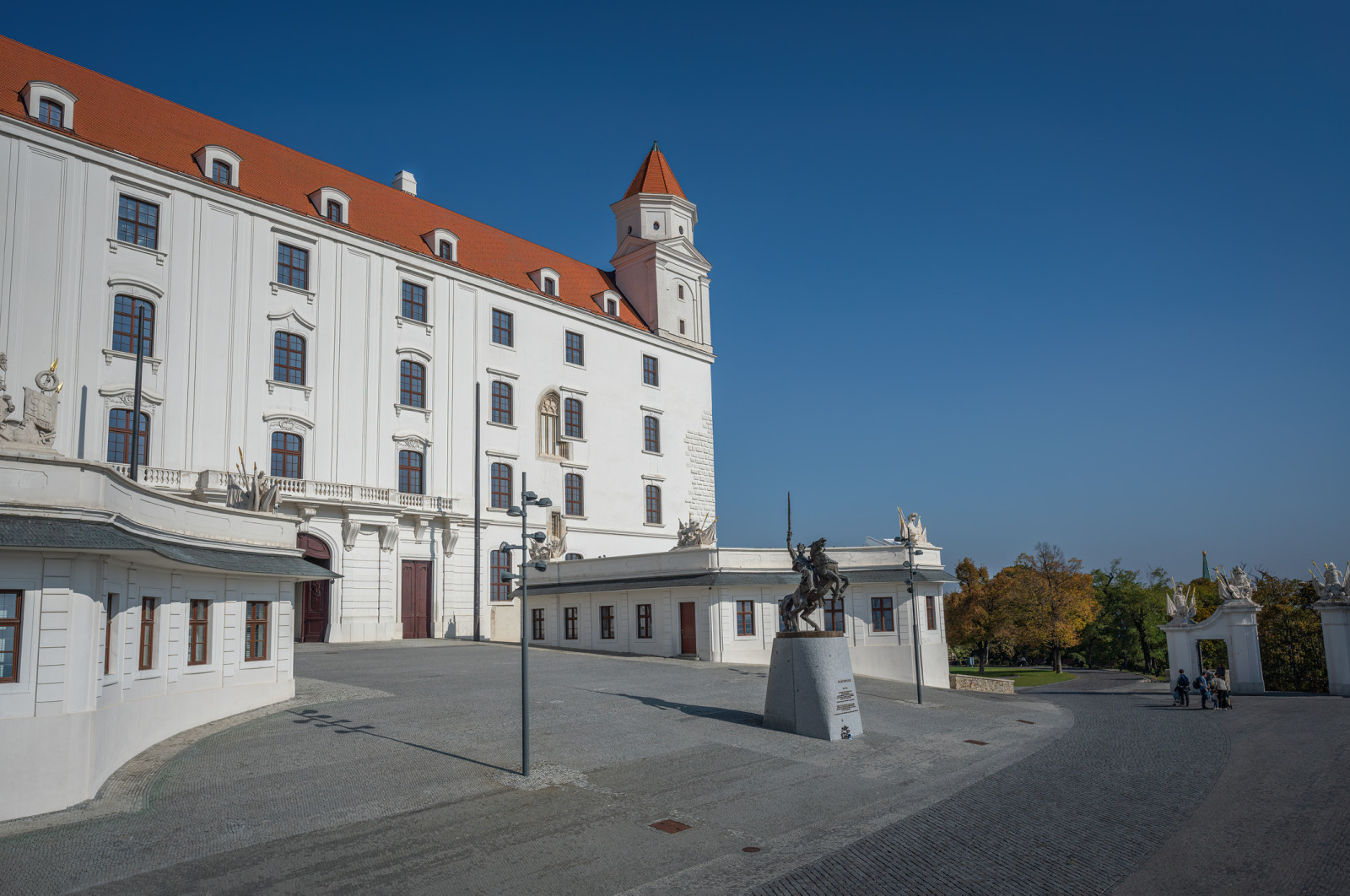
Nestled along the Danube River, Bratislava stands as Slovakia's charming capital where medieval history meets modern vibrancy. The city's compact Old Town, dominated by the iconic Bratislava Castle perched on a hill, offers a fascinating blend of Gothic architecture, Habsburg elegance, and quirky contemporary art that creates a uniquely Central European atmosphere.
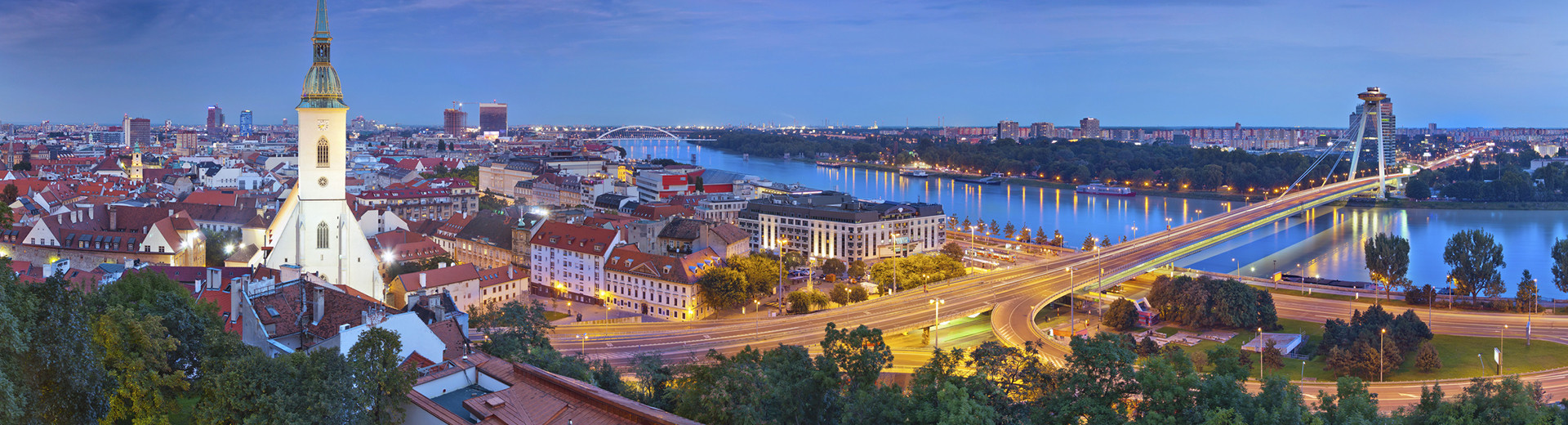
As you wander through Bratislava's cobblestone streets, the visual experience captivates with its contrasting architectural styles—from the blue Church of St. Elizabeth to the stark UFO Bridge spanning the Danube. Self-guided tours in Bratislava allow you to discover these treasures at your own rhythm, pausing whenever a café terrace or hidden courtyard catches your eye. With our audio guide, you'll explore Bratislava without a guide rushing you along, yet still uncover the stories that bring this compact capital to life.
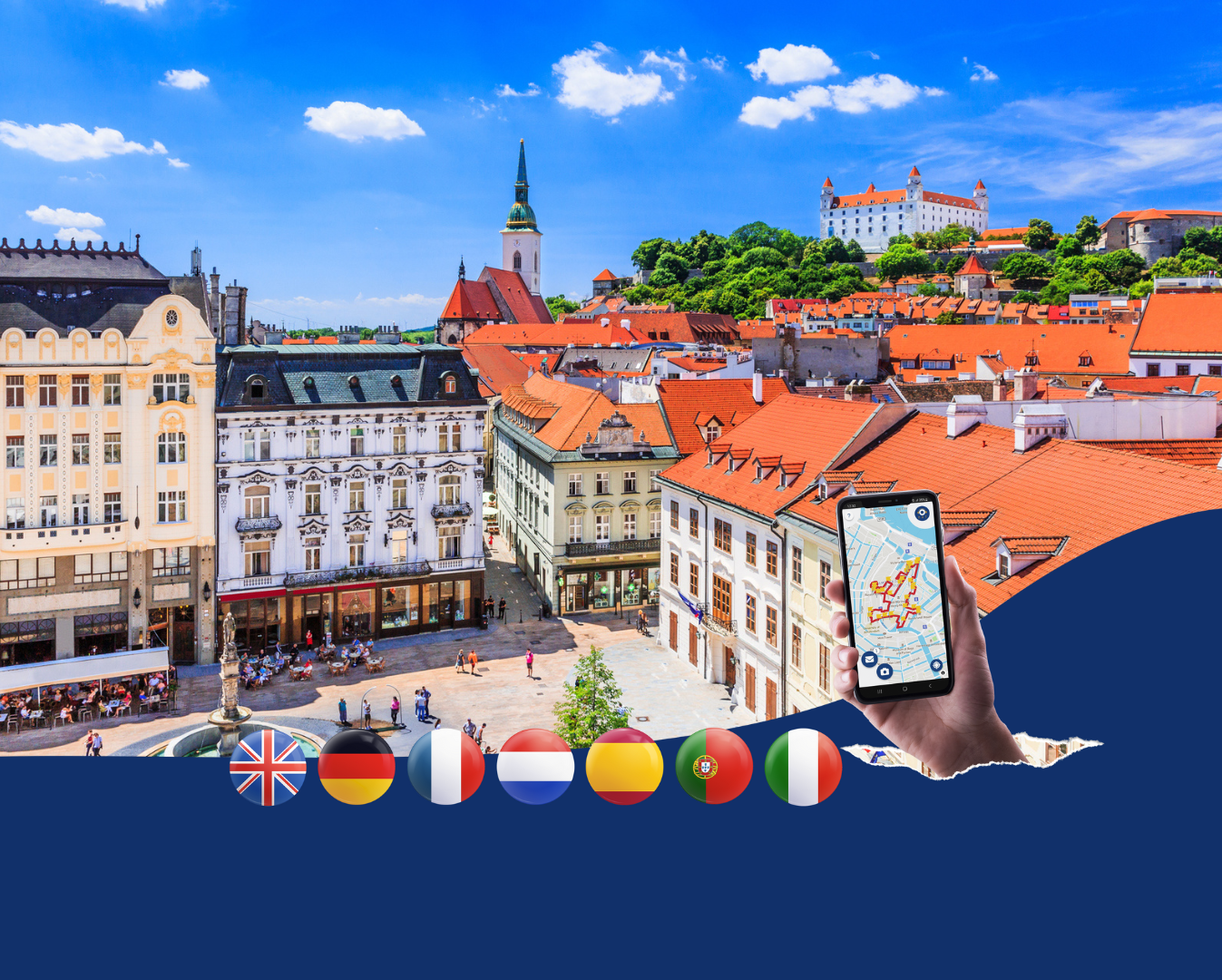
Besides our audio guides, there are many other ways to discover Bratislava. Here are some suggestions that can enrich your visit:
Best Time to Visit
Spring (April-June) and early fall (September-October) offer the most pleasant weather for Bratislava walking tours, with comfortable temperatures and fewer crowds. Summer brings vibrant outdoor festivals and café culture, though it can get hot. Winter visitors can enjoy magical Christmas markets from late November through December, one of the most charming ways to see Bratislava in one day.
Getting There
Bratislava is easily accessible by train from Vienna (just 1 hour), Budapest, and Prague. The city has its own international airport with connections to major European cities. Once in Bratislava, the compact city center is perfect for self-guided tours, but you can also use the efficient public transportation system with trams and buses. Consider purchasing a Bratislava Card for unlimited public transport and museum discounts.
Opening Hours and Holidays
Most museums and attractions in Bratislava are open Tuesday through Sunday (10:00-18:00), with many closed on Mondays. Shops typically operate from 9:00-19:00 on weekdays and until 13:00 on Saturdays. Important national holidays when attractions might be closed include January 1, January 6, Easter, May 1, May 8, September 1, and December 24-26.
Comfort on the Go
Bratislava's Old Town features cobblestone streets, so comfortable walking shoes are essential for your sightseeing tours. Carry a water bottle, especially in summer, and consider a light raincoat in spring and fall as weather can change quickly. The Bratislava attractions map in our app works offline, but a power bank is recommended for all-day exploration.
Local Customs and Etiquette
Slovaks appreciate if you learn a few basic phrases like "Dobrý deň" (hello) and "Ďakujem" (thank you). When visiting churches or religious sites during your Bratislava walking tours, modest dress is appropriate. Tipping in restaurants is customary (around 10%), but not mandatory. In traditional restaurants, it's common to pay the server directly rather than leaving money on the table.
Yes, the tour works fully offline after downloading. Download it on Wi-Fi before you travel and you have access to all audio, maps and points of interest throughout the day without using any mobile data.
Free walking tours exist in Bratislava but operate on tips. CityAppTour offers a fixed-price route you can start whenever you arrive, on any day and at any time.
Behind every tour is a small team of historians, local storytellers and content creators with a passion for culture and heritage. We don't make generic guides, but personal narratives based on local knowledge, first-hand experience and historical research. That way you can be sure you won't hear clichés, but the real story of Bratislava — with three names, three languages and a castle that watched empires rise and fall from above the Danube.
Bratislava is the only European capital city that borders two other countries — Austria and Hungary — and sits on the Danube within sight of both. It was the capital of the Kingdom of Hungary for 250 years (1536–1783), when it was known as Pozsony in Hungarian and Pressburg in German — the city still has significant German and Hungarian cultural layers beneath the Slovak surface. And it became an independent capital only in 1993, when Czechoslovakia peacefully dissolved — making it one of the youngest capitals in Europe, which gives it an energy and openness that older, more established capitals sometimes lack.
Yes, the tour can be shared with the people you are travelling with. Check the app for the current sharing options and any available group discounts.
The tour is written for adults, with content on Slovak history, the Habsburg period and the city's architectural heritage. Children aged around 12 and up generally follow along well. Younger children can enjoy the walk — the castle, the Michael Gate tower and the Danube waterfront tend to hold the attention of visitors of all ages.
A CityAppTour audio tour lets you explore Bratislava entirely at your own pace — the old town is compact and rewards wandering. You can linger at the castle terrace, duck into a wine bar in the old town lanes or sit by the Danube without a group schedule. No booking required and the tour works offline from the moment you download it.
Two days is ideal for Bratislava. Day one: the old town on foot — the Main Square (Hlavné námestie), the Old Town Hall, the Michael Gate, the narrow lanes around Beblavého Street, the Cathedral of St Martin and the Danube waterfront. Day two: Bratislava Castle and its history museum (the view over the Danube and Austria from the castle terrace is exceptional), the Blue Church (Art Nouveau, one of the most photogenic buildings in Slovakia), the Petržalka district for a look at the socialist housing landscape across the Danube, and an evening in one of the old town's wine bars.
Bratislava's most iconic dish is bryndzové halušky — small potato dumplings served with bryndza (a soft, tangy sheep's milk cheese unique to Slovakia) and topped with crispy bacon. It is the national dish of Slovakia and the most authentic thing to eat in any traditional Slovak restaurant. Lokše (thin potato pancakes filled with poppy seeds, jam or goose fat) are sold as street food near the old town. Bratislavský rožok (the Bratislava roll) is a crescent-shaped pastry filled with poppy seeds or walnuts — a baked specialty that has EU Protected Geographical Indication status.
Bratislava uses the euro (Slovakia joined the eurozone in 2009) but prices reflect Slovak wage levels rather than Western European ones. A sit-down meal at a mid-range restaurant costs 10–18 euros per person. A pint of beer in a bar costs 2–4 euros. A coffee costs 2–3 euros. This makes Bratislava one of the most affordable eurozone capitals for visitors from Western Europe — comparable to Riga or Tallinn but more accessible geographically, just 60 km from Vienna. The gap between Bratislava and Vienna prices is among the largest of any two neighbouring European capitals.
Plan a half day for the CityAppTour audio tour of Bratislava — enough time to walk the route at a relaxed pace, stop for a drink, explore a side street and still have time to linger where the city grabs you. The idea is to get to know Bratislava in a day, not to tick off a checklist in an hour.
Yes — Bratislava is one of the most underrated city-break destinations in Central Europe. The compact old town (Staré Mesto) is genuinely charming: pedestrianised cobblestone streets, pastel Baroque facades, pavement cafés and a castle hill overlooking the Danube. It is often compared unfavourably to Vienna or Prague, but this misses the point — Bratislava's appeal is its human scale, its affordability and the fact that it has not yet been overwhelmed by mass tourism. Two days is the ideal length; the city is walkable, lively and easy to navigate.
Reviews