Why CityAppTour?
Explore a city in 1 day
Stories from local guides
Pause whenever you want
Works offline
Hands-free navigation
English guide
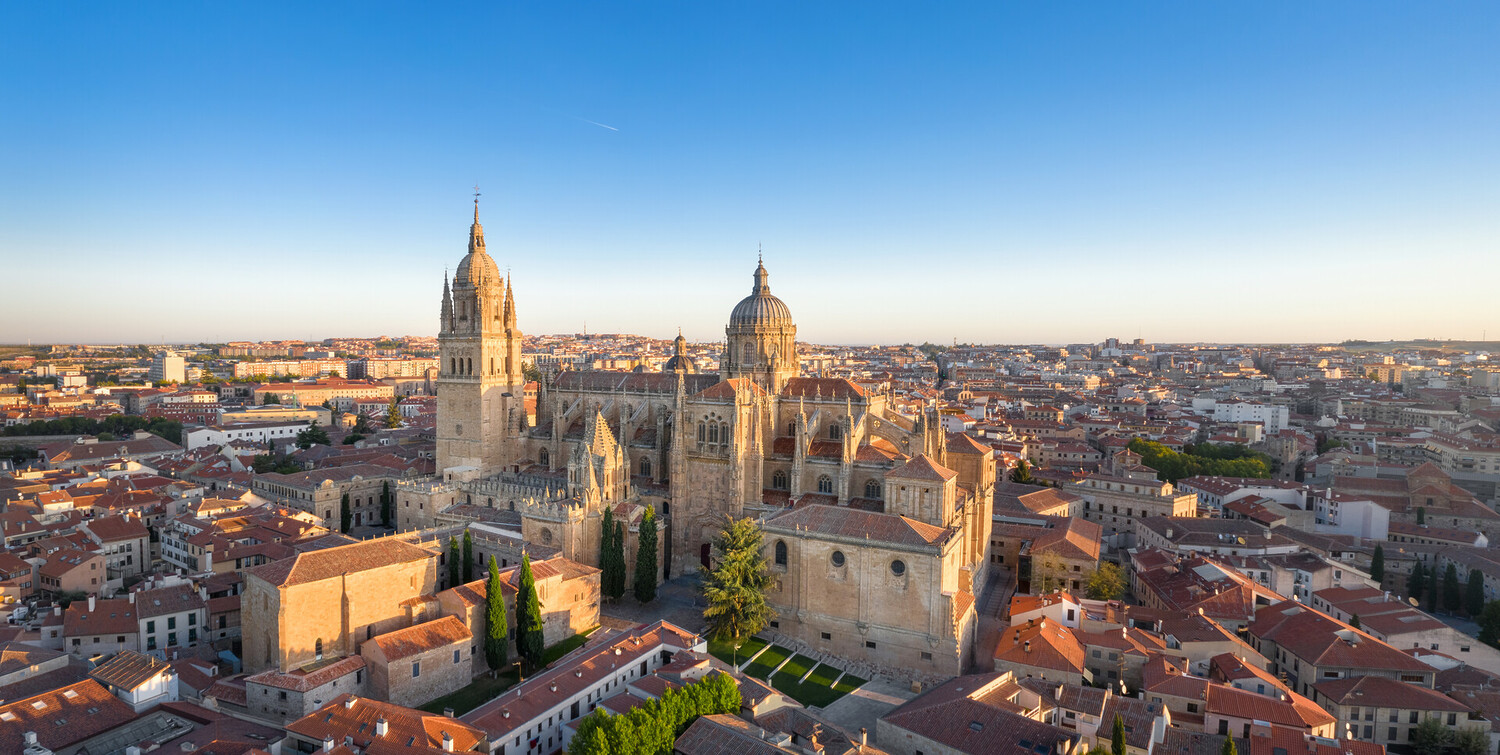
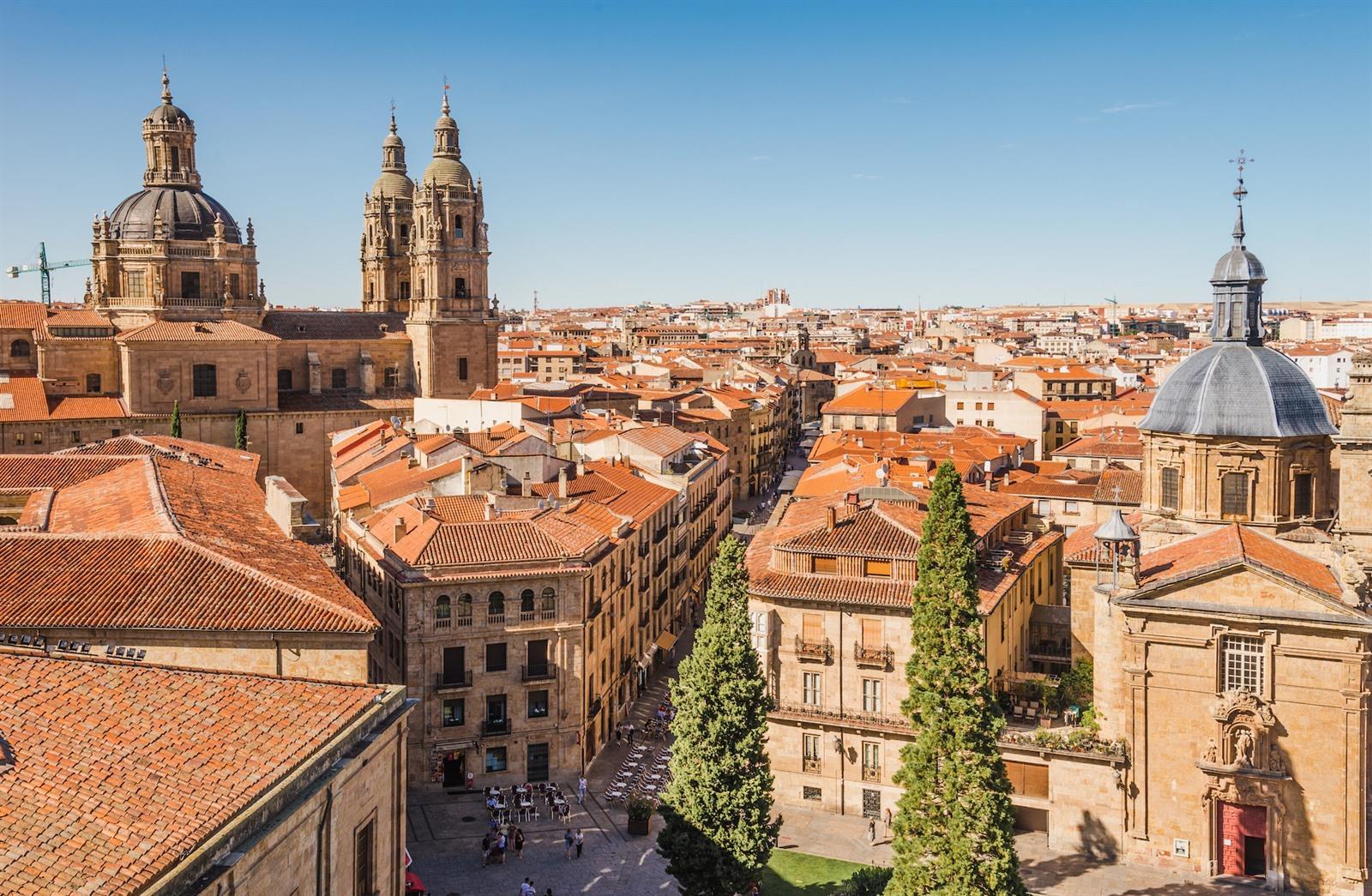
Salamanca, one of Spain’s most beautiful historic cities, is famous for its golden sandstone architecture, magnificent plazas and centuries-old university. Often called the “Golden City,” Salamanca glows warmly in the sunlight, with landmarks such as Plaza Mayor, the Old and New Cathedrals and the historic University of Salamanca shaping its unforgettable skyline. This UNESCO World Heritage city blends medieval streets, Renaissance façades and lively Spanish culture, making it a perfect destination for travelers who want to explore history on foot.
With a self-guided tour in Salamanca, you can discover the city at your own pace while uncovering the stories behind its most famous landmarks and lesser-known corners. Follow an audio tour of Salamanca on your smartphone, pause whenever you like, explore hidden courtyards, admire centuries-old façades or stop for tapas along the way. A self-guided walking tour in Salamanca offers a flexible and engaging way to experience the city’s history, architecture and culture while discovering hidden gems in Salamanca that many visitors miss.
Spend some time in Salamanca’s lively central square, one of Spain’s finest Baroque plazas. Its arcades, cafés, and golden façades make it especially beautiful in the evening.
Admire this striking Gothic palace, famous for the hundreds of stone shells decorating its façade. It is one of Salamanca’s most recognizable historic buildings.
Explore one of Europe’s oldest universities and admire its richly decorated historic buildings. Don’t forget to look for the famous frog hidden on the façade.
Climb through the upper levels of the cathedral complex and enjoy impressive views over Salamanca’s rooftops, towers, and historic center.
Discover a fascinating collection of Art Nouveau and Art Deco inside one of Salamanca’s most distinctive buildings, known for its beautiful glass façade.
Visit this impressive Dominican monastery with its ornate façade, church, and cloisters. The site is also connected to Christopher Columbus.
Relax in this romantic garden near the old city walls. It is linked to the Spanish literary classic La Celestina and offers lovely views nearby.
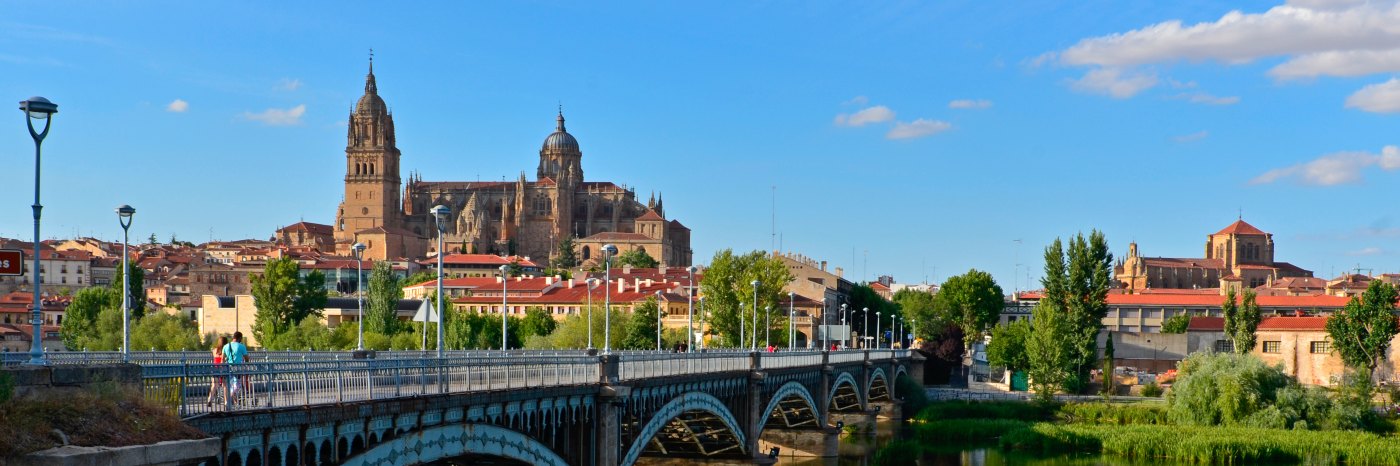
Walk across Salamanca’s historic Roman bridge over the Tormes River. From here, you get one of the best views of the city’s cathedral skyline.
Sample local specialties such as hornazo or enjoy a tapas crawl around Salamanca. Calle Van Dyck is especially popular with locals and students.
See one of Salamanca’s most distinctive medieval towers. Its unusual octagonal shape offers a glimpse into the city’s defensive and noble past.
Best Time to Visit
Salamanca is a great destination throughout the year, but spring (April–June) and early autumn (September–October) offer the most comfortable conditions for Salamanca walking tours. Temperatures are generally pleasant for exploring the historic center on foot, while the city is lively without the peak summer heat. July and August can be hot, especially in the afternoon, so plan self-guided tours in Salamanca for the morning or early evening. Winter is quieter and cooler, making it a good option if you prefer fewer visitors around popular Salamanca attractions.
Getting There
Salamanca is well connected to Madrid and other Spanish cities by train and bus. From Madrid, trains from Chamartín station can reach Salamanca in around 1.5 to 2 hours, while direct buses are also available from Madrid-Barajas Airport. Salamanca’s train station is approximately a 20-minute walk from the historic center, and the bus station is around 15 minutes away on foot. Salamanca Airport is located about 20 kilometers outside the city but has limited flights, so most international visitors arrive via Madrid. Once in Salamanca, the compact historic center is best explored on foot, making self-guided walking tours especially convenient.
Opening Hours and Holidays
Opening hours for Salamanca museums, churches, and historic monuments vary throughout the year, with many attractions opening in the morning, closing for part of the afternoon, and reopening later in the day. Some sites also have shorter opening hours on Sundays and public holidays. Shops generally stay open later than in many northern European countries, and restaurants often serve lunch from around 1:30pm and dinner from approximately 8:30pm onwards. If you are planning Salamanca sightseeing around major holidays such as Easter, Christmas, or national Spanish holidays, check individual attraction schedules in advance, as opening times may change.
Comfort on the Go
Salamanca’s historic center is compact and highly walkable, but its cobbled streets make comfortable shoes essential for a full day of sightseeing. During summer, bring water, sunscreen, and a hat, as temperatures can become high during the afternoon and many routes offer limited shade. In cooler months, layers are useful because mornings and evenings can feel considerably colder. A charged smartphone or portable power bank is also recommended when following self-guided tours in Salamanca, especially if you are using maps and audio throughout the day.
Local costumes and Etiquette
Salamanca is a lively university city, so expect a relaxed atmosphere and busy streets and terraces, particularly in the evening. Spanish meal times are generally later than in many other European countries, with lunch often beginning after 1:30pm and dinner commonly starting after 8:30pm. When visiting Salamanca’s cathedrals, churches, and religious buildings, dress respectfully and keep noise to a minimum, especially during services. Tipping is not obligatory in Spain, although rounding up the bill or leaving a small amount for good service is appreciated. Salamanca is also famous for its nightlife, but its historic streets are residential too, so keeping noise down late at night is considerate.
Salamanca sits about 210 km west of Madrid, roughly a 1.5-hour direct train ride or a similar drive by car. That makes it an easy day trip from the capital, though an overnight stay lets you see the old town lit up after dark, when the golden sandstone glows under floodlights.
There's no free tour of comparable quality to a paid audio tour in Salamanca. Free walking tours run on tips, which typically add up to €10-15 per person anyway, and rely on a live guide's schedule. A fixed-price audio tour gives you the same depth of information without the pressure to tip or the wait for a start time.
Yes — Salamanca is one of Spain's most rewarding stops, ranked among the country's best-preserved historic centres and a UNESCO World Heritage Site since 1988. Its golden sandstone architecture, lively student population, and compact walkable core make it easy to see a lot in a short time, without the crowds of Madrid or Barcelona.
No, once downloaded the tour works fully offline. You download the audio files and map over Wi-Fi before you start, then everything plays locally on your phone - no data connection or roaming charges needed while you walk through Salamanca.
Not necessarily — the old town is compact and walkable, with most sights clustered around Plaza Mayor and the Rúa Mayor. What's harder to find on your own is the context behind what you're looking at, which is where a self-guided audio tour helps: it fills in the history and hidden details as you walk, at your own pace, without booking a group tour.
Plan at least one full day for Salamanca. The old town is compact but dense — Plaza Mayor, the Cathedral, and the University (founded in 1218, the oldest in Spain) alone take a few hours. A half-day audio tour covers the highlights, but a full day lets you also find the famous frog carved into the Casa de las Conchas façade.
Salamanca is built almost entirely from golden sandstone, earning it the nickname "La Ciudad Dorada" (The Golden City). Combined with its UNESCO-listed old town and Spain's oldest university, it has a academic, monumental character that's rare even in Spain. The stone literally glows at sunset.
CityAppTour is made by people with a genuine passion for local stories and independent travel. Every route is built on real research into a city's history, architecture, and hidden details — not generic summaries. The Salamanca tour was put together by people who walked the streets themselves, checking every fact and every corner along the way.
Spring (April–June) and early autumn (September–October) offer the best mix of mild weather and manageable crowds. Summer gets hot, often above 30°C, and the city empties out somewhat when students leave. Winter is quiet and cold but atmospheric, especially around the illuminated Plaza Mayor during the Christmas season.
A small stone frog is carved into one of the skulls decorating the Casa de las Conchas façade in Salamanca, and tradition says finding it without help brings good luck, often linked to passing university exams. Generations of students and visitors still search the wall for it — it's one of the city's most photographed details.
The tour is written primarily for adults, with historical and architectural detail. Children around 12 and older can usually follow and enjoy the stories, especially ones involving legends like the hidden frog on Casa de las Conchas, but younger kids may lose interest.
Founded in 1218, it's the oldest university in Spain and one of the oldest in the world still operating. Columbus reportedly consulted its scholars before his voyage, and its Plateresque façade is considered one of the finest in Spanish Renaissance architecture — students still search it for the hidden skull said to bring luck.