Why CityAppTour?
Explore a city in 1 day
Stories from local guides
Pause whenever you want
Works offline
Stress-free navigation with audio guidance
English guide
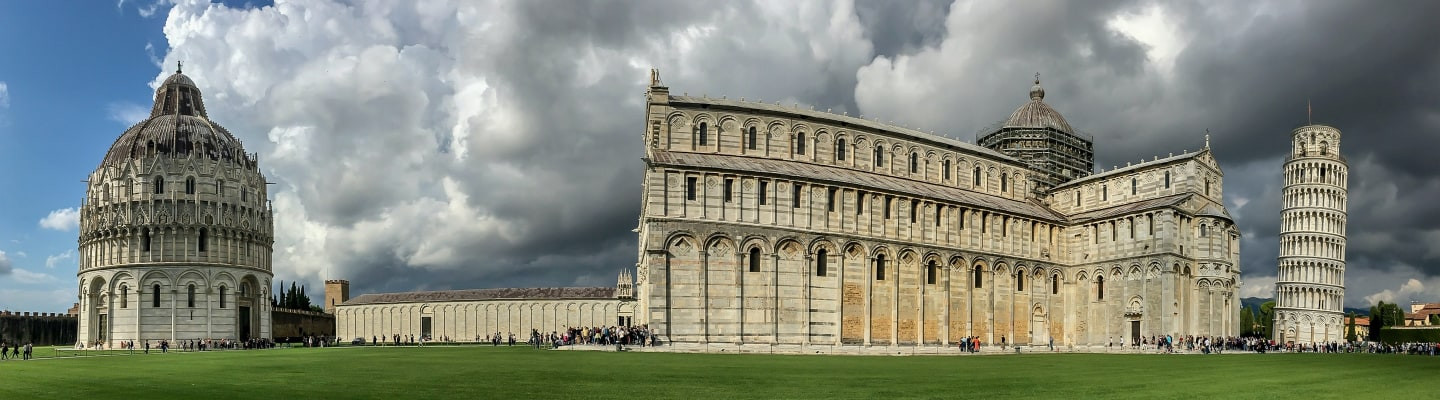
Beyond its iconic Leaning Tower, Pisa harbors centuries of rivalry, scientific innovation, and maritime glory. This former powerful maritime republic once controlled Mediterranean trade routes and nurtured scientific minds like Galileo Galilei, whose experiments from the Tower revolutionized our understanding of gravity.
As you wander through Pisa's medieval streets, your audio guide reveals the fascinating stories behind Piazza dei Miracoli's architectural wonders and the city's lesser-known quarters. Local voices guide you through university districts and along the Arno River, allowing you to pause for gelato or coffee whenever inspiration strikes—something traditional guided tours simply can't offer.
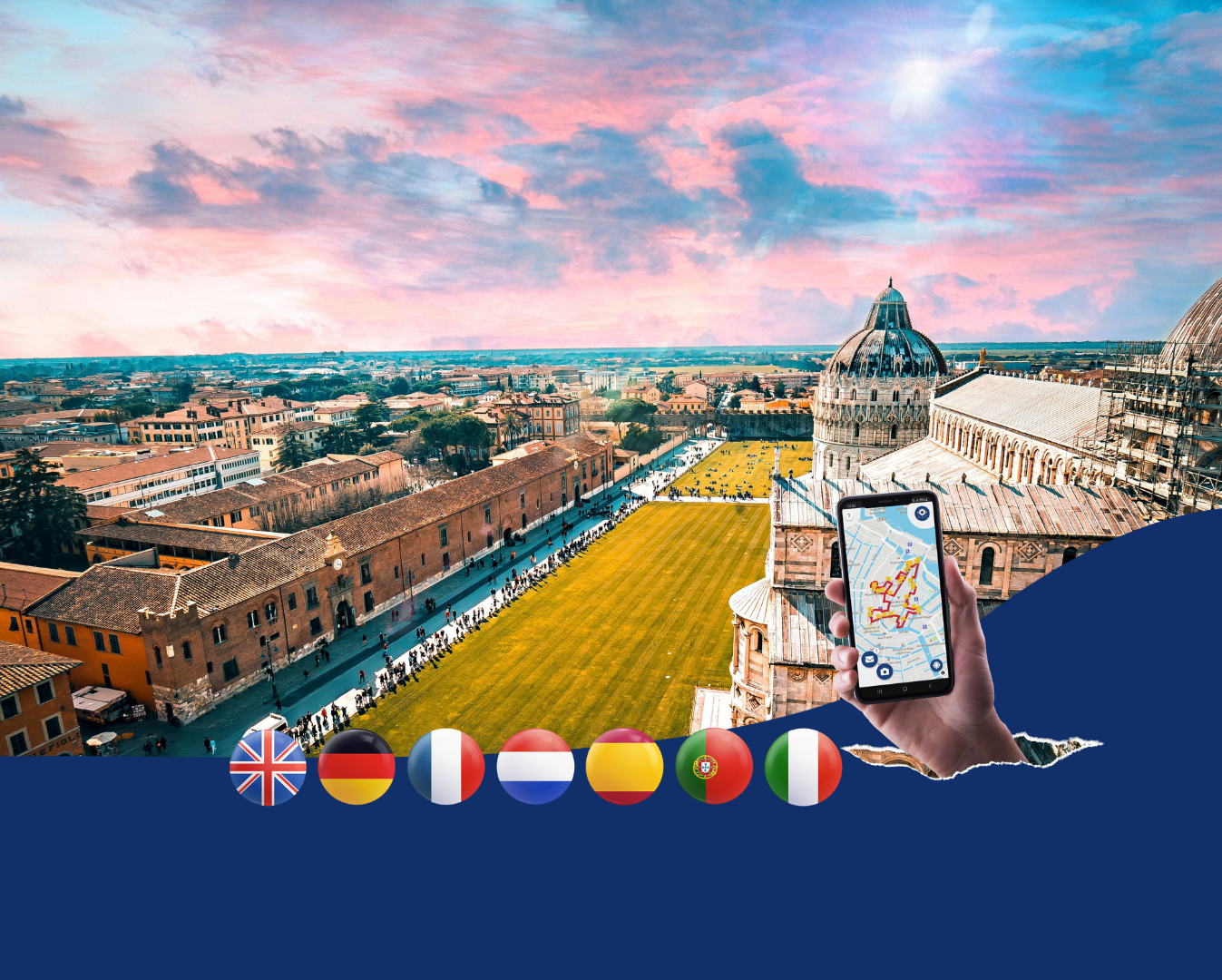
Besides our audio guides, there are many other ways to discover Pisa. Here are some suggestions that can enrich your visit:
Best Time to Visit
Spring (April-May) and early fall (September-October) offer the perfect balance of pleasant weather and manageable crowds for Pisa sightseeing tours. Summer brings vibrant events like Giugno Pisano and the Luminara festival, but also peak tourist numbers. Winter visitors enjoy the benefit of seeing Pisa without a guide and with minimal crowds, though some attractions may have reduced hours.
Getting There
Pisa is well-connected by train to major Italian cities, with the central station just a 20-minute walk from the Leaning Tower. If arriving by plane at Pisa International Airport, the PisaMover shuttle connects to the city center in just 5 minutes. For self-guided tours Pisa offers excellent public transportation with the LAM bus network, though the historic center is compact enough to explore on foot.
Opening Hours and Holidays
Most Pisa attractions open around 9:00-10:00 AM and close between 5:00-7:00 PM, with extended hours in summer. The Leaning Tower typically allows the last entry one hour before closing. Many museums close on Mondays, and shops often observe a midday break (1:00-3:30 PM). During major holidays like Christmas, Easter, and August 15th (Ferragosto), expect limited services and adjusted schedules.
Comfort on the Go
Wear comfortable shoes for Pisa walking tours as you'll encounter cobblestone streets and the 294 steps of the Leaning Tower if you choose to climb it. Bring a refillable water bottle to use at the city's many public fountains, especially during summer months. A portable phone charger is essential for using digital maps and your audio guide throughout the day.
Local Customs and Etiquette
Italians appreciate basic greetings in Italian—try "buongiorno" (good day) or "grazie" (thank you). When entering churches or the Cathedral in Piazza dei Miracoli, modest dress is required (covered shoulders and knees). For dining, remember that cappuccino is considered a breakfast drink only, while a small tip (1-2€) for good service is appreciated but not mandatory in restaurants.
The tour is written for adults, with content on Romanesque architecture, Galileo — who was born in Pisa — and the city's medieval history. Children aged around 12 and up generally follow along well. Younger children can enjoy the walk — the Tower and the Campo dei Miracoli tend to hold the attention of visitors of all ages.
Yes, the tour works fully offline after downloading. Download it on Wi-Fi before you travel and you have access to all audio, maps and points of interest throughout the day without using any mobile data.
Behind every tour is a small team of historians, local storytellers and content creators with a passion for culture and heritage. We don't make generic guides, but personal narratives based on local knowledge, first-hand experience and historical research. That way you can be sure you won't hear clichés, but the real story of Pisa — with the tower that engineers spent 200 years trying to straighten, the cathedral that inspired Romanesque churches across Tuscany and the riverside city that the day-trippers walk past on their way back to the train.
Plan a half day for the CityAppTour audio tour of Pisa — enough time to walk the route at a relaxed pace, stop for a drink, explore a side street and still have time to linger where the city grabs you. The idea is to get to know Pisa in a day, not to tick off a checklist in an hour.
Yes — climbing the Leaning Tower is genuinely worth doing, but requires advance booking. The tower has 294 steps in a spiralling staircase that curves noticeably as you ascend — the tilt is physically perceptible inside and grows more disorienting the higher you go. The view from the top over the Campo dei Miracoli, the Duomo and the surrounding Tuscan landscape is excellent. Tickets cost approximately 20 euros and must be booked online in advance; same-day tickets are rarely available. Time slots are limited, so book as soon as your travel dates are confirmed. The climb takes about 30–40 minutes.
Pisa's most celebrated dish is cecina — a thin, crispy chickpea flatbread baked in a wood-fired oven and served warm, sometimes folded into a bread roll as a torta con la cecina. It is sold at street food stalls and bakeries throughout the city and is unique to Pisa and the surrounding Livorno area. Baccalà alla livornese (salt cod in tomato sauce) is the classic second course of the region. Cantucci (hard almond biscuits dipped in Vin Santo dessert wine) are ubiquitous across Tuscany but especially well made in the Pisa area.
Free walking tours exist in Pisa but operate on tips. CityAppTour offers a fixed-price route you can start whenever you arrive, on any day and at any time.
Two hours is the minimum for the Campo dei Miracoli — the square containing the Tower, the Cathedral, the Baptistery and the Camposanto. The Cathedral (Duomo) is free to enter and far more beautiful inside than most visitors expect; allow at least 30 minutes. The Baptistery has extraordinary acoustics — staff demonstrate this with a sung note every few minutes, which echoes for around 10 seconds. Two hours is tight; three hours is comfortable and allows you to walk from the train station (20 minutes each way) and explore the old town along the Arno river.
Pisa is the only Tuscan city with a genuinely world-famous monument that most people have seen in photographs but never visited properly. The Campo dei Miracoli — with the Cathedral, Tower, Baptistery and Camposanto in a single green square — is one of the finest ensembles of Romanesque architecture in the world, and the quality of the marble work, the mosaics and the bronze doors rewards slow looking. Beyond the Campo, Pisa has a functioning university founded in 1343 — one of the oldest in Europe — giving the city a lived-in, non-touristy energy along the Lungarni (the riverside streets) that most Tuscan day-trip destinations lack.
They serve different purposes. Florence is a full-destination city with multiple days of world-class art museums, architecture and food culture. Pisa is best as a half-day or full-day excursion — the Campo dei Miracoli is one of the most concentrated and impressive architectural ensembles in Italy, but the rest of the city, while pleasant, does not carry the same weight. For most visitors doing both, the natural sequence is Florence as the base and Pisa as a day trip (50 minutes by train). If forced to choose just one: Florence. But Pisa deserves more than a quick photo at the tower.
Yes, the tour can be shared with the people you are travelling with. Check the app for the current sharing options and any available group discounts.
A CityAppTour audio tour lets you explore Pisa entirely at your own pace — you can linger at the Campo dei Miracoli as long as the architecture demands, walk the riverside Lungarni at your own rhythm and stop at a local bar for a torta con la cecina without a group schedule. No booking required and the tour works offline from the moment you download it.