Why CityAppTour?
Explore a city in 1 day
Stories from local guides
Pause whenever you want
Works offline
Stress-free navigation with audio guidance
English guide
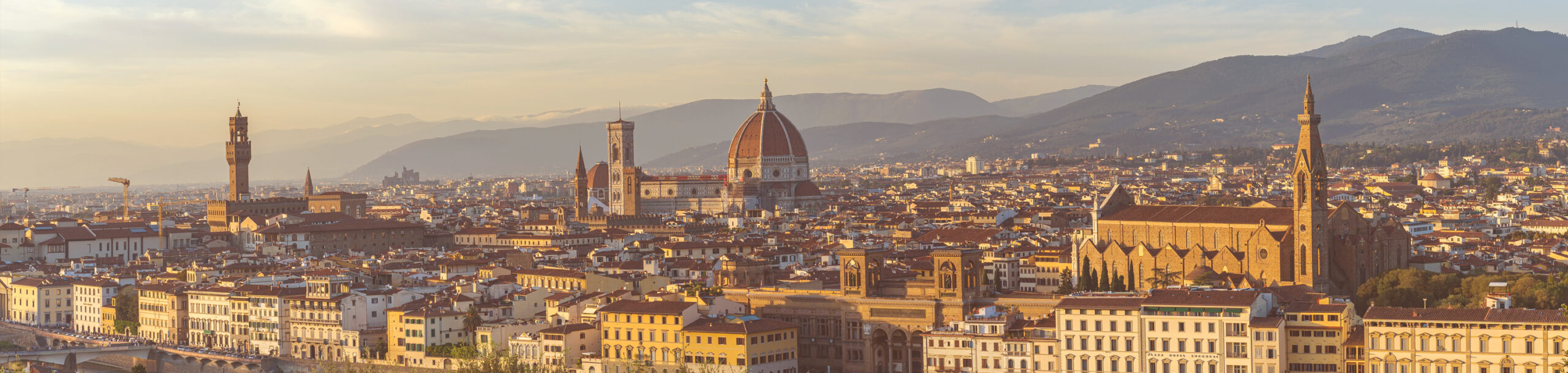
The birthplace of the Renaissance unfolds before you as Brunelleschi's dome dominates Florence's skyline and the Arno River flows beneath ancient bridges. This compact city packs an extraordinary artistic punch, with more masterpieces per square meter than perhaps anywhere else on earth.
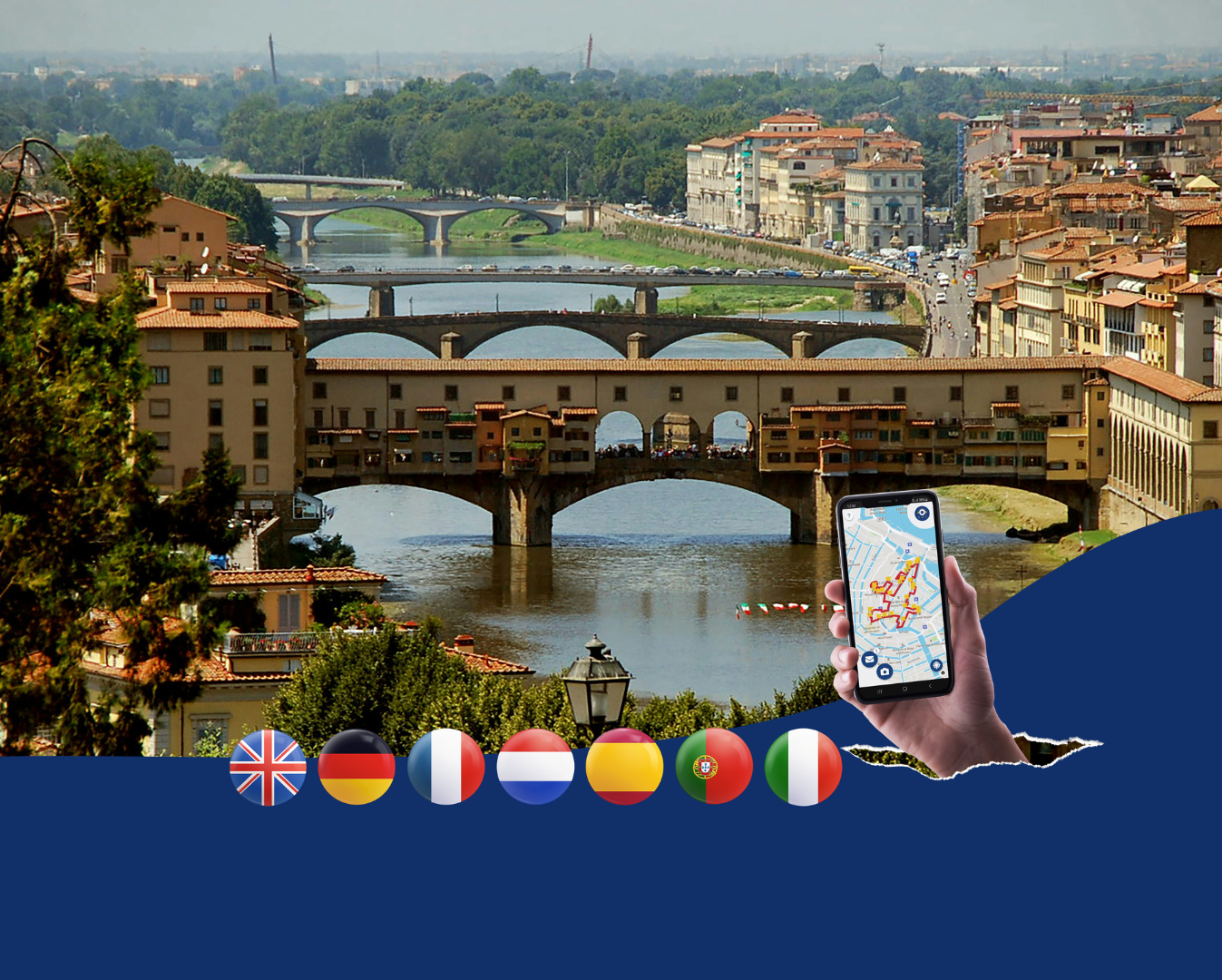
An audio guide transforms your Florence sightseeing tour into a personal journey through time. As you wander past the Uffizi Gallery or across Ponte Vecchio, local stories and historical insights flow through your headphones, allowing you to pause for that perfect gelato or lingering glance at a Botticelli without missing a beat.
Besides our audio guide, there are many other ways to discover Florence. Here are some suggestions that can enrich your visit:
Best Time to Visit
Spring (April-May) and fall (September-October) offer the perfect balance of pleasant weather and manageable crowds for Florence walking tours. Summer brings vibrant energy but also heat and tourists, while winter provides a more intimate experience with the city. If possible, visit mid-week to avoid weekend crowds at major attractions.
Getting There
Florence's compact historic center is best explored on foot, with most attractions within a 20-minute walk of each other. The city is well-connected by train to major Italian cities (90 minutes from Rome, 35 minutes from Bologna). From Florence Airport, take the T2 tram directly to the city center. Purchase a Firenze Card for access to public transport and major museums if planning to see Florence in one day.
Opening Hours and Holidays
Most museums open from 8:15 AM to 6:50 PM, with closures on Mondays. The Duomo complex typically opens from 10 AM to 5 PM. Shops generally operate from 9 AM to 7:30 PM, with many closing for lunch (1-3:30 PM). Be aware that attractions have limited hours on Sundays and may close completely on major holidays like Easter, Christmas, and January 1st.
Comfort on the Go
Florence's cobblestone streets demand comfortable walking shoes for self-guided tours in Florence. Carry a refillable water bottle to use at the city's many public fountains, especially in summer when temperatures can exceed 35°C (95°F). A portable phone charger is essential for using navigation and audio guides all day.
Local Customs and Etiquette
Florentines appreciate basic Italian greetings—start interactions with "buongiorno" (good day) or "buonasera" (good evening). When visiting churches, shoulders and knees must be covered. For dining, remember that cappuccino is considered a breakfast drink only, and tipping is not expected (though rounding up the bill is appreciated). Respect quiet hours (1-3 PM) in residential areas.
Florence is famous for six things: the Uffizi Gallery — home to Botticelli's Birth of Venus and Primavera, Leonardo da Vinci's Annunciation and dozens of the world's most important Renaissance paintings —, Michelangelo's David at the Accademia —, the Duomo (Santa Maria del Fiore) with Brunelleschi's dome — the largest brick dome ever constructed and an engineering feat still not fully understood —, the Ponte Vecchio — the medieval bridge over the Arno lined with goldsmiths' shops since the 16th century —, the Oltrarno neighbourhood and Pitti Palace on the south bank, and the city's role as the birthplace of the Renaissance and of the Italian language as a literary standard, through Dante, Petrarch and Boccaccio.
Three days is the comfortable minimum for Florence's essential highlights. Day one: the Uffizi Gallery (book tickets weeks in advance — queues without a booking can exceed 3 hours), the Piazza della Signoria and Palazzo Vecchio, the Ponte Vecchio and the Oltrarno neighbourhood. Day two: the Accademia for Michelangelo's David (book in advance), the Duomo complex including the climb to Brunelleschi's dome (book in advance — limited slots), and the San Lorenzo market area. Day three: the Pitti Palace and Boboli Gardens, the Piazzale Michelangelo for the panoramic view over the city, and a deeper exploration of the Oltrarno artisan workshops.
Yes, the tour works fully offline after downloading. Download it on Wi-Fi before you travel and you have access to all audio, maps and points of interest throughout the day without using any mobile data.
Yes — advance booking is essential for the three main attractions and strongly recommended for all others. The Uffizi, the Accademia (David) and Brunelleschi's Dome all require timed entry tickets booked online in advance. Without a booking, queues for the Uffizi in peak season can exceed 3–4 hours. The Dome has very limited daily slots — book as soon as your travel dates are confirmed. The Pitti Palace and Bargello Museum are less crowded but benefit from online booking in summer.
Plan a half day for the CityAppTour audio tour of Florence — enough time to walk the route at a relaxed pace, stop for a drink, explore a side street and still have time to linger where the city grabs you. The idea is to get to know Florence in a day, not to tick off a checklist in an hour.
A CityAppTour audio tour lets you explore Florence entirely at your own pace — essential in a city where every piazza, church facade and street corner has a story worth pausing for. You can linger at the Piazza della Signoria, cross the Ponte Vecchio without a group, or sit in the Oltrarno and watch the artisans at work. No booking required and the tour works offline from the moment you download it.
Florence is the only city in the world where a single generation of artists — Brunelleschi, Donatello, Masaccio, Ghiberti, Botticelli, Leonardo and Michelangelo — transformed the visual language of Western civilisation in the span of about 100 years. It is the city where modern banking was invented by the Medici. It is where Dante wrote the Divine Comedy in Italian rather than Latin, establishing the Italian language. And it is a UNESCO World Heritage city where the historic centre is so intact that walking from the Duomo to the Ponte Vecchio feels like moving through the 15th century.
Yes, the tour can be shared with the people you are travelling with. Check the app for the current sharing options and any available group discounts.
The tour is written for adults, with content on the Renaissance, the Medici and Florentine art history. Children aged around 12 and up generally follow along well. Younger children can enjoy the walk — the Duomo, the Ponte Vecchio and the Piazzale Michelangelo tend to hold the attention of visitors of all ages.
Free walking tours exist in Florence but operate on tips. CityAppTour offers a fixed-price route you can start whenever you arrive, on any day and at any time.
Florence has three iconic dishes: bistecca alla Fiorentina — a massive T-bone steak from Chianina cattle, grilled rare over wood coals and sold by weight, the most celebrated dish in Tuscany —, lampredotto (tripe sandwiches), a street food unique to Florence sold from mobile carts around the Mercato Centrale —, and ribollita, a thick bread and vegetable soup, quintessentially Florentine and best eaten in a trattoria on a winter's day. Chianti Classico — from the hills between Florence and Siena — is the local wine. Gelato in Florence is exceptional: the city has some of the finest traditional gelaterie in Italy.
Behind every tour is a small team of historians, local storytellers and content creators with a passion for culture and heritage. We don't make generic guides, but personal narratives based on local knowledge, first-hand experience and historical research. That way you can be sure you won't hear clichés, but the real story of Florence — with the family that bankrolled the Renaissance, the dome that shouldn't have stayed up, the bridge that survived everything, and the steak that requires no accompaniment.