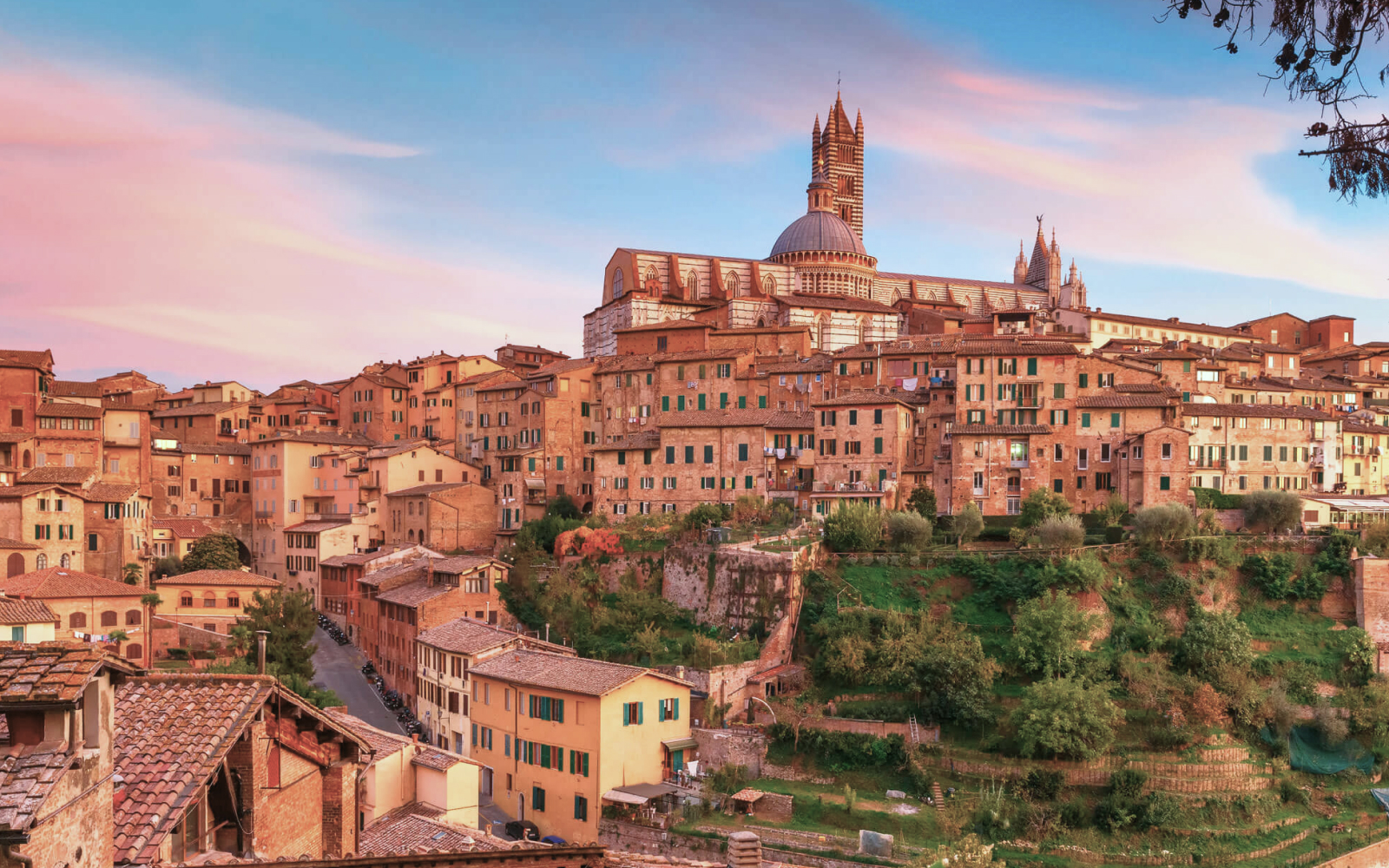
Self guided city walk with an audio guide in Siena.
Walk at your own pace and listen to the English stories,
carefully collected by a local guide.
Explore Siena at your own pace with this self-guided audio tour.
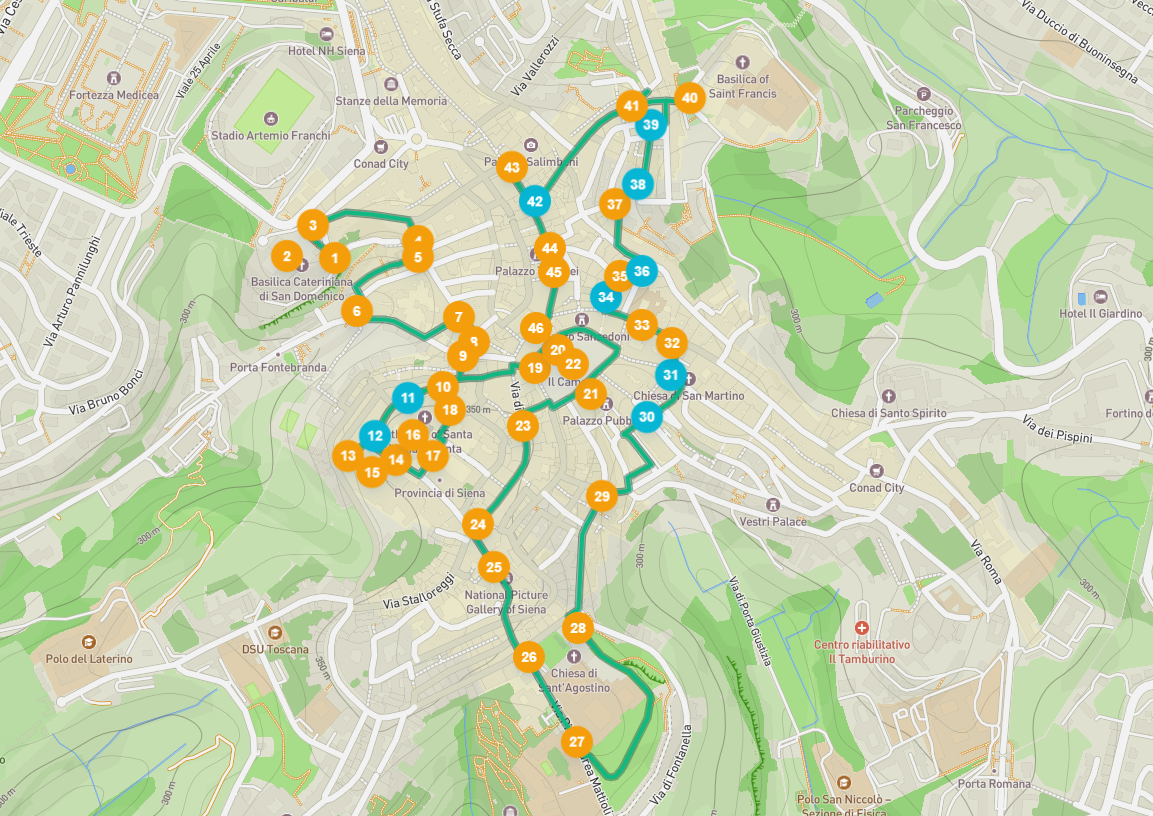
This audio guide takes you through Siena's medieval heart in one relaxed walk — past the striped marble of the Duomo, the shell-shaped Piazza del Campo where the Palio has been run since 1633, the spring waters of Fontebranda, and the frescoed Piccolomini Library. The tour also includes a detailed audio description of the spectacular interior of Siena Cathedral, covering its art, architecture and remarkable details. Please note that an entrance ticket for Siena Cathedral and the Piccolomini Library is required to visit the interior.
Between the landmarks, the route follows quiet alleys and contrada corners most visitors walk straight past, with stories about the rivalries, legends, and traditions that still shape the city today.
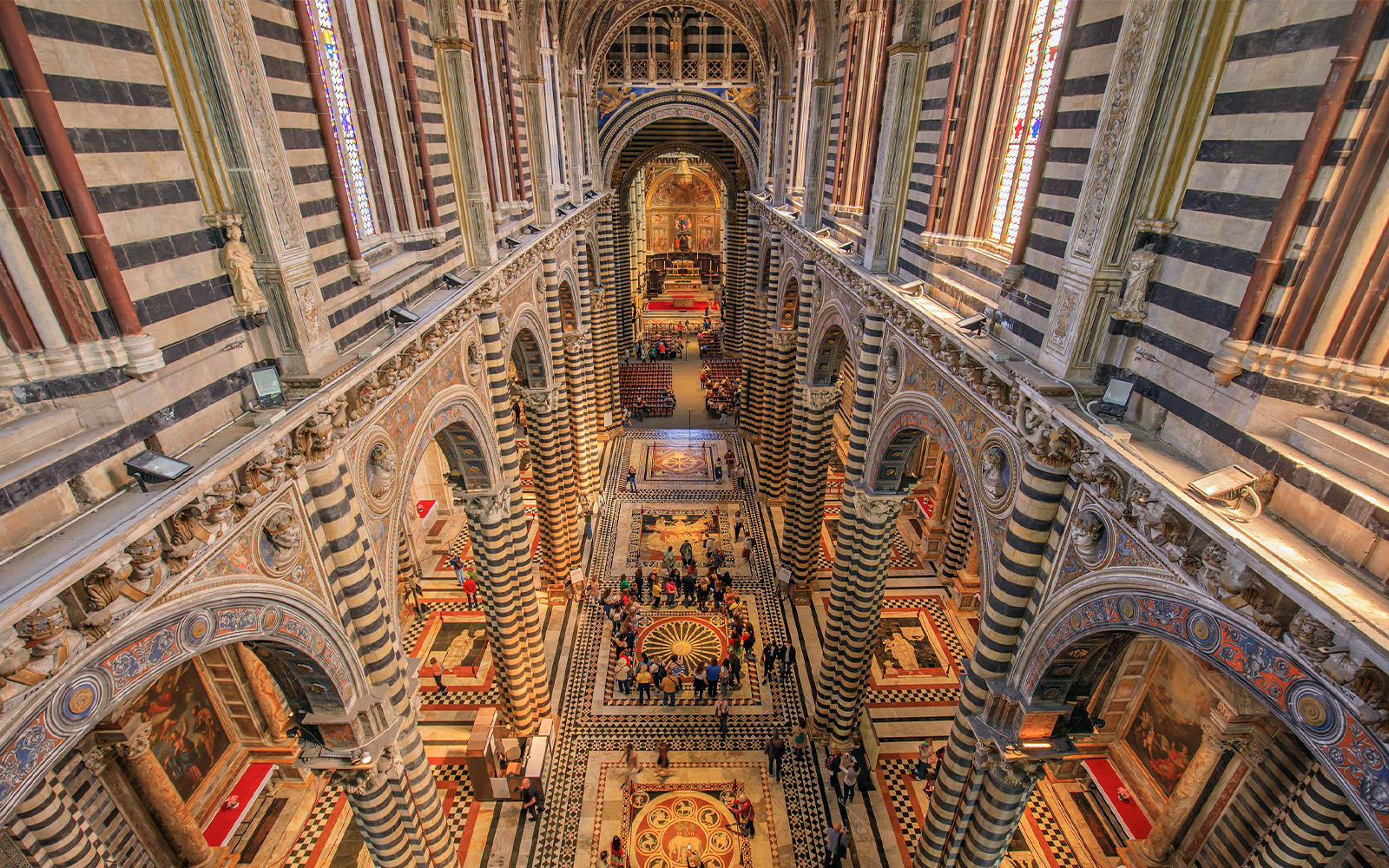
A masterpiece in black and white: This cathedral is anything but modest.
The Duomo of Siena is one of the finest examples of Italian Gothic architecture. Inside, you’ll find marble floors, works by great masters and an interior richer than you might expect.
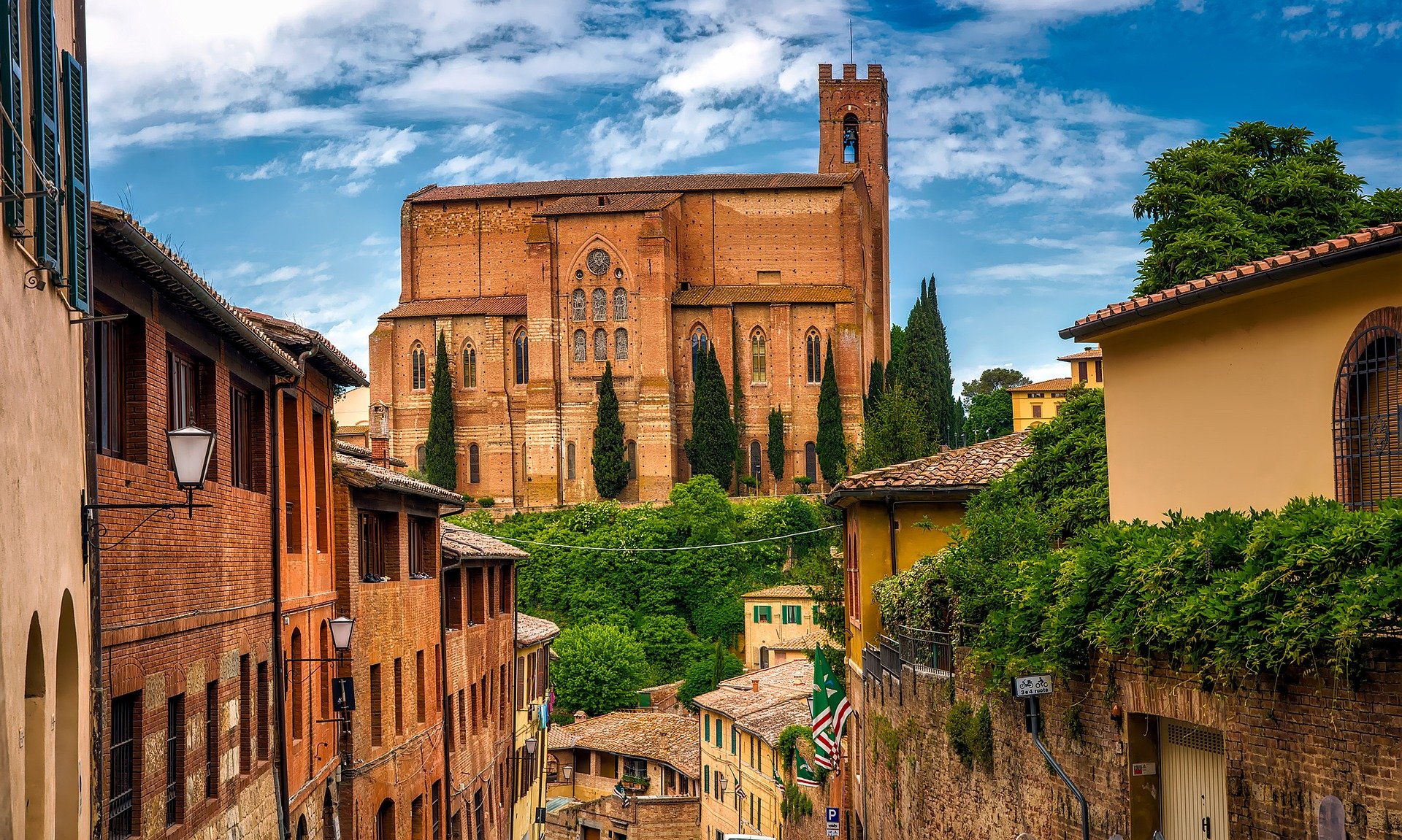
A special detail: A relic of Saint Catherine is preserved here.
The Basilica di San Domenico is dedicated to Saint Catherine of Siena. Its simple exterior contrasts with the important religious role it plays in the city.
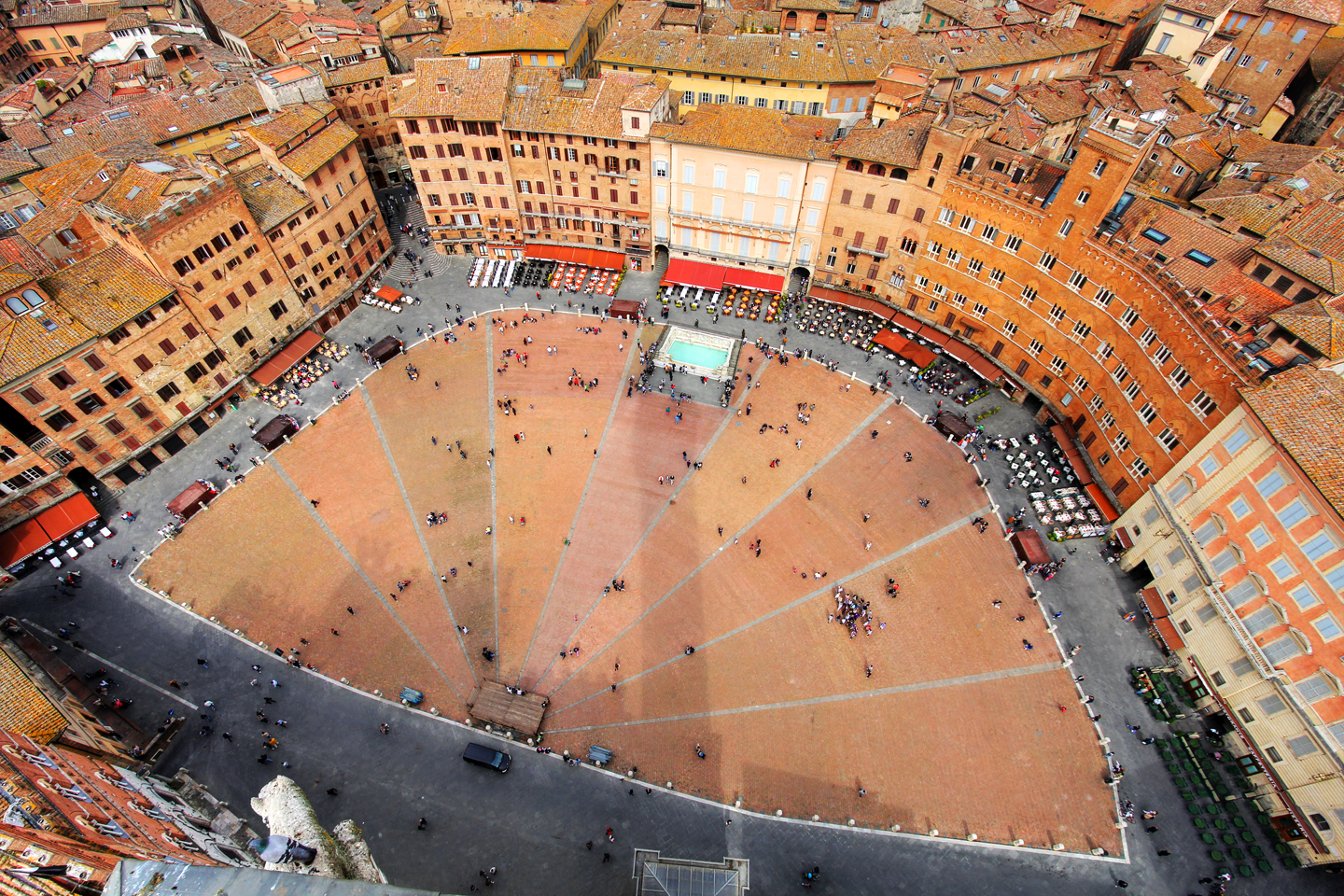
The heart of Siena: The city has gathered here for centuries.
Piazza del Campo is one of the most distinctive squares in Italy, famous for its shell shape. It is also the setting of the historic Palio horse race.
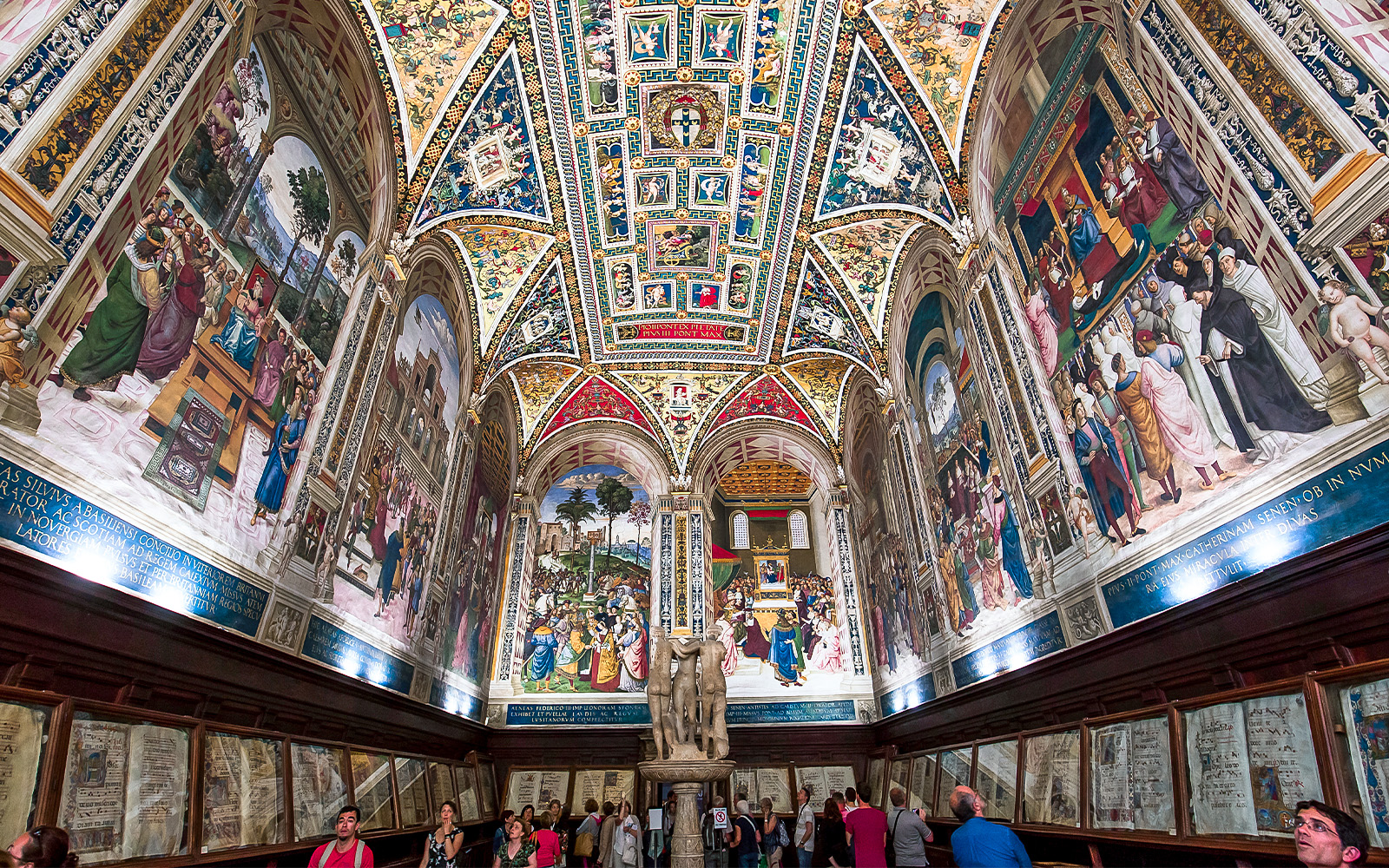
Art in every detail: This space is a celebration of color and storytelling.
The Piccolomini Library, located inside the cathedral, is known for its vibrant frescoes. They depict the life of Pope Pius II and bring history to life.
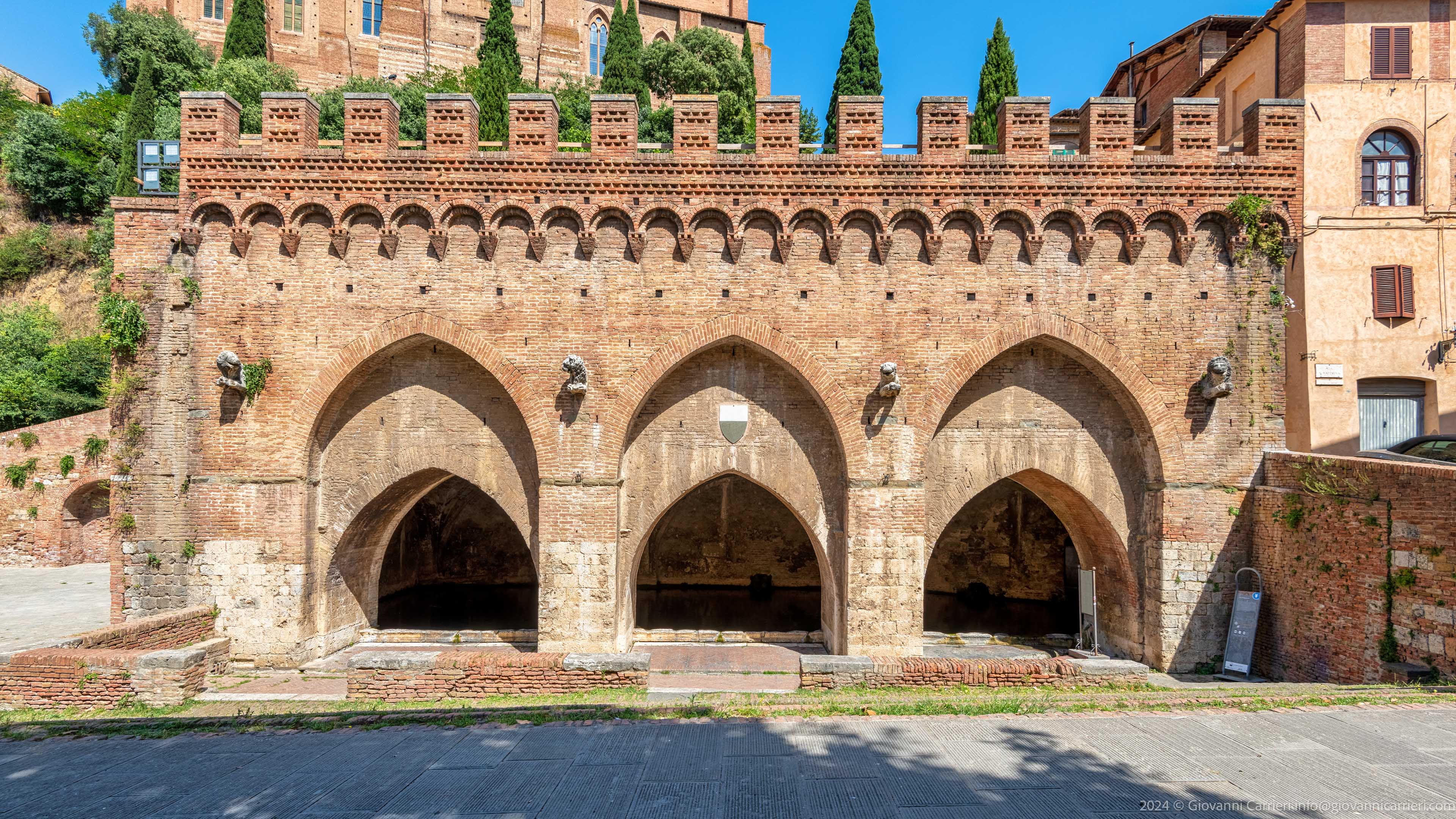
Imagine this: This was a place of work, washing and everyday life.
Fontebranda is one of Siena’s oldest fountains and supplied the city with water for centuries. It reveals how essential water was for residents and local crafts.
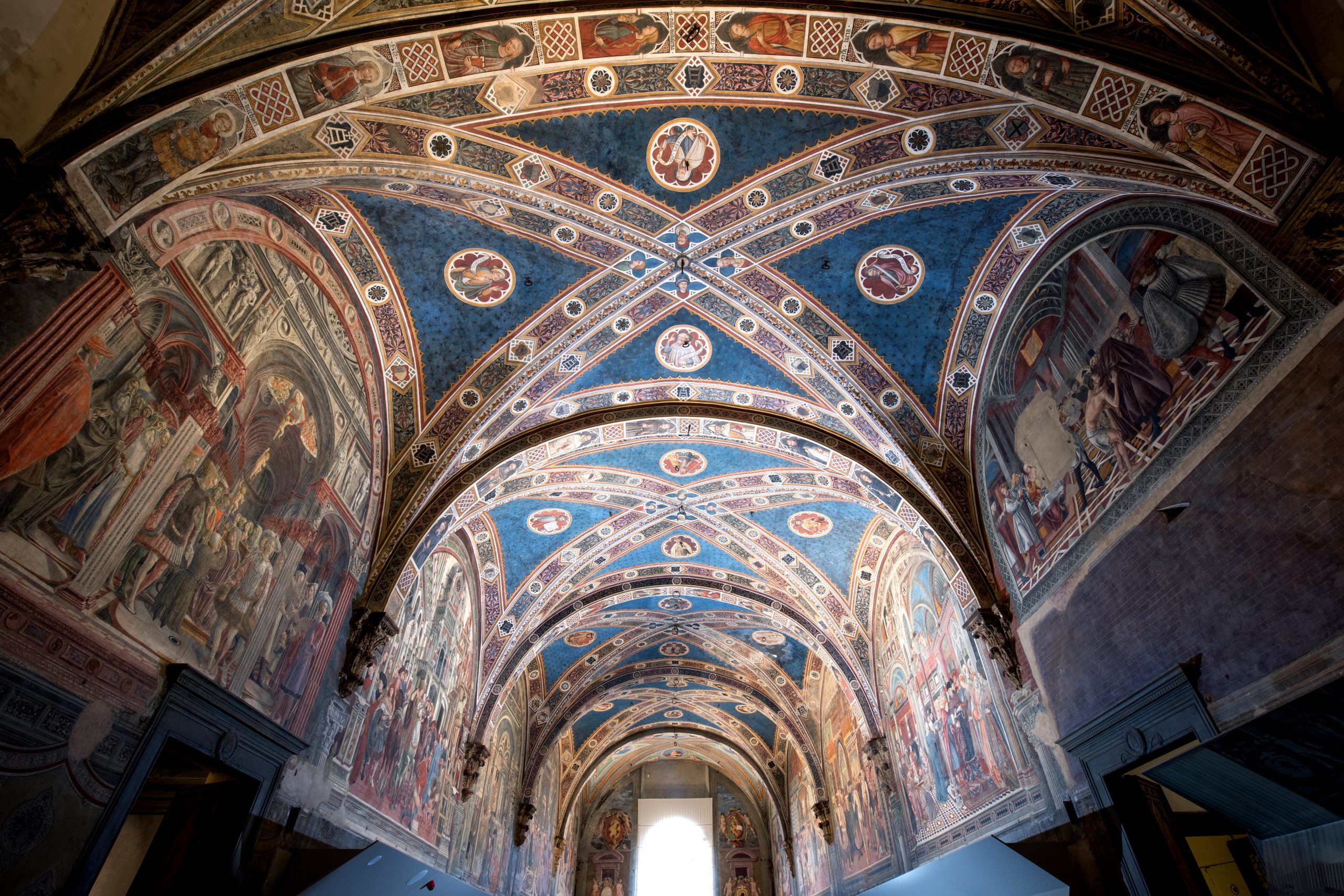
From hospital to museum: A place that has constantly evolved.
Santa Maria della Scala was once one of Europe’s first hospitals and stands directly opposite the cathedral. Today, it is a cultural center filled with art and history.