Why CityAppTour?
Explore a city in 1 day
Stories from local guides
Pause whenever you want
Works offline
Stress-free navigation with audio guidance
English guide
Founded in 16 BC, Trier stands as Germany's oldest city with an astonishing collection of Roman monuments. The imposing Porta Nigra gate and the remarkably preserved Imperial Baths tell stories of a time when Trier rivaled Rome itself as the "Second Rome" of the empire.
These ancient tales unfold through your headphones as you wander at your own pace through Trier's UNESCO-listed sites. Local voices guide you through medieval squares and along the Moselle River, revealing connections between Roman engineering and modern city life that guidebooks often miss.
Explore Trier's iconic Roman gate where the ancient history comes to life. This well-preserved monument is the largest Roman city gate north of the Alps.
Sample exquisite Moselle Valley wines in one of Germany's oldest wine regions. Learn about local viticulture traditions while enjoying views of the vineyards that have produced wine since Roman times.
Book here.
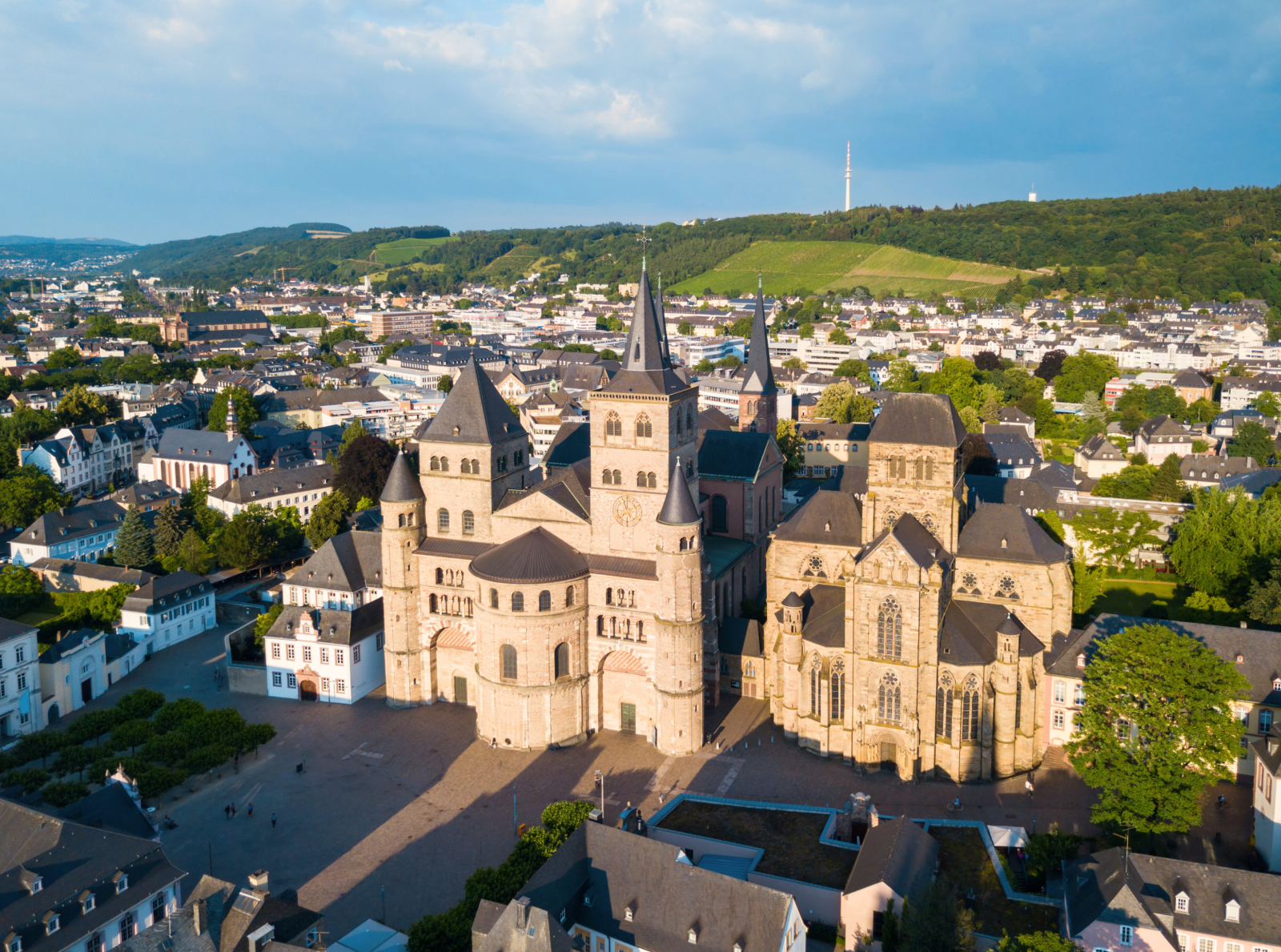
Visit Germany's oldest cathedral, featuring an impressive mix of Romanesque, Gothic, and Baroque architecture. The cathedral houses the Holy Tunic, believed to be the robe worn by Jesus during crucifixion.
Explore the ancient Roman amphitheater that once seated 20,000 spectators. Venture into the underground chambers where gladiators and wild animals were kept before performances.
Visit the birthplace of philosopher Karl Marx, now a museum dedicated to his life and work. The exhibition provides fascinating insights into his revolutionary ideas and their global impact.
Wander through the massive ruins of what was once one of the largest Roman bath complexes outside of Rome. The underground heating system shows remarkable Roman engineering.
Take a relaxing boat trip along the Moselle River to enjoy Trier's beautiful surroundings and vineyard-covered hills from a different perspective.
Book here
Experience the vibrant atmosphere of Trier's main market square, surrounded by colorful medieval and Renaissance buildings. The Market Cross dates back to 958 AD.
Discover one of Germany's most important archaeological museums with an outstanding collection of Roman artifacts, including the largest Roman gold hoard found outside Italy.
Best Time to Visit
Spring and early autumn offer the most pleasant weather for exploring Trier's self-guided tours. May through September is ideal for enjoying the outdoor cafés and wine gardens. December brings charming Christmas markets to the medieval squares, while summer hosts numerous wine festivals in the surrounding Moselle Valley.
Getting there
Trier is well-connected by regional trains from major German cities like Frankfurt (2.5 hours) and Cologne (2 hours). The compact historic center makes Trier walking tours easy to navigate on foot. For exploring the surrounding wine regions, consider renting a bicycle or using the efficient local bus network. If driving, park at one of the peripheral P+R lots to avoid the limited parking in the center.
Opening Hours and Holidays
Most Trier attractions open from 10 AM to 5 PM, with extended hours during summer. Museums typically close on Mondays. Shops close earlier on Saturdays (4 PM) and remain closed on Sundays, though restaurants and cafés stay open. Plan your Trier sightseeing tours around German public holidays like October 3rd (German Unity Day) and regional holidays in Rhineland-Palatinate.
Comfort on the Go
Trier's historic center features cobblestone streets, so comfortable walking shoes are essential for your Trier walking tour. The Moselle Valley creates a microclimate that can be surprisingly warm in summer, so bring water and sun protection. In winter, layers are recommended as you'll alternate between heated museums and cooler outdoor sites.
Local Customs and Etiquette
When visiting Trier's cathedral or churches, modest dress is appreciated. In restaurants, it's customary to greet other diners with a friendly "Guten Tag" when entering. Tipping is common but modest – rounding up the bill or adding 5-10% is sufficient. When sampling local wines, it's polite to make eye contact during a toast and say "Prost!"